



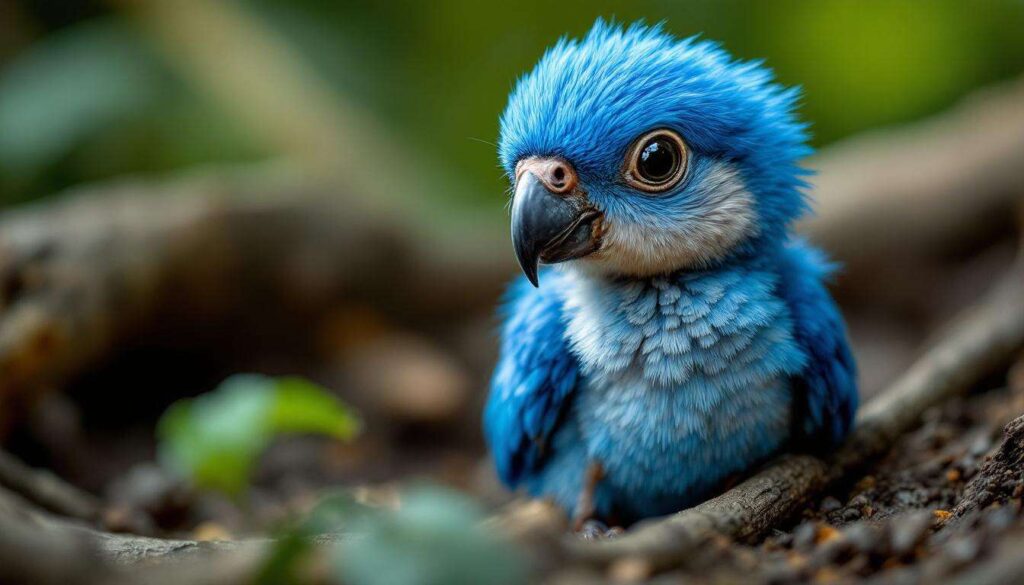
The conservation world has witnessed a moment of profound significance with the hatching of a Spix’s macaw chick at a European zoo. This remarkable event marks a pivotal milestone for a species that had been declared extinct in the wild, offering a tangible symbol of hope in the global fight against biodiversity loss. The vibrant blue parrot, immortalised in popular culture yet critically endangered in reality, now has a renewed chance at survival thanks to decades of dedicated conservation work. As the chick takes its first breaths, the scientific community and environmental advocates worldwide are celebrating what represents not merely a birth, but a testament to the power of coordinated conservation efforts.
A landmark event in species conservation
The significance of the October 2025 hatching
The arrival of the Spix’s macaw chick on 14 October 2025 represents one of the most significant achievements in modern conservation biology. This birth occurred within the carefully controlled environment of a European zoological facility, where specialists have dedicated countless hours to ensuring optimal breeding conditions. The event carries particular weight given the species’ precarious status, with every individual representing an irreplaceable genetic resource for the population’s future.
The successful hatching demonstrates several critical factors:
- Advanced understanding of the species’ reproductive biology
- Refined husbandry techniques developed over years of research
- Effective genetic management to maintain population diversity
- International collaboration between conservation institutions
Why this birth matters globally
Beyond the immediate joy of welcoming a new member to this critically endangered species, the chick’s arrival sends ripples of optimism throughout the conservation community. The birth validates years of meticulous planning and resource allocation, proving that extinction need not be inevitable when sufficient effort and expertise are applied. This success story provides a blueprint for other species teetering on the brink of disappearance, demonstrating that recovery is possible even from the most dire circumstances.
| Conservation metric | Status |
|---|---|
| Wild population (pre-extinction) | Functionally extinct |
| Captive population | Approximately 180 individuals |
| Recent breeding success rate | Improving annually |
This milestone also serves to galvanise public attention and financial support for conservation initiatives, reminding stakeholders that their investments can yield measurable, life-affirming results. The story of this single chick connects with audiences on an emotional level whilst simultaneously highlighting the scientific rigour underpinning such achievements.
An insight into the Spix’s Macaw
Physical characteristics and natural behaviour
The Spix’s macaw, scientifically known as Cyanopsitta spixii, is a strikingly beautiful bird distinguished by its vibrant blue plumage. Adults typically measure between 55 and 57 centimetres in length, with a distinctive grey head and pale blue underparts that contrast elegantly with their deeper blue wings and tail. Their powerful beaks, designed for cracking hard seeds and nuts, are black and perfectly adapted to their natural diet.
In their natural habitat, these macaws exhibited specific behavioural patterns:
- Monogamous pair bonding that often lasted for life
- Nesting in cavities of caraibeira trees
- Feeding primarily on seeds from native vegetation
- Communicating through loud, distinctive calls
- Flying in small family groups across the caatinga landscape
The species’ historical range and decline
Originally, the Spix’s macaw inhabited a remarkably restricted range in northeastern Brazil, specifically within the caatinga ecosystem of Bahia state. This semi-arid region, characterised by thorny scrubland and seasonal drought, provided the specific environmental conditions the species required. The macaws’ dependence on particular tree species for nesting and feeding made them exceptionally vulnerable to habitat alteration.
The decline of the Spix’s macaw resulted from a devastating combination of threats. Widespread habitat destruction transformed vast swathes of caatinga into agricultural land, eliminating crucial nesting sites and food sources. Simultaneously, the illegal wildlife trade targeted these birds relentlessly, with collectors willing to pay extraordinary sums for such rare specimens. By the late twentieth century, the species had vanished from the wild, with the last confirmed sighting of a wild individual occurring in 2000.
Understanding this tragic history provides essential context for appreciating the magnitude of current conservation achievements and the challenges that lie ahead in restoring wild populations.
The species reintroduction efforts
Brazilian government initiatives
The Brazilian Ministry of the Environment has positioned the Spix’s macaw reintroduction as a flagship conservation priority, recognising both the ecological importance and symbolic value of the species. These governmental efforts involve extensive habitat restoration work in the bird’s historical range, focusing on regenerating native vegetation and protecting remaining caatinga fragments from further degradation. The ministry has established protected areas specifically designated for the eventual release of captive-bred birds.
Key governmental actions include:
- Legal protection of critical habitat areas
- Enforcement against illegal wildlife trafficking
- Funding allocation for long-term monitoring programmes
- Community engagement initiatives to build local support
- Infrastructure development for release sites
International collaboration frameworks
The reintroduction strategy relies heavily on international partnerships that transcend national boundaries. Ecological organisations from multiple continents have contributed expertise, funding, and logistical support to the recovery programme. This global cooperation ensures that the most advanced conservation techniques are applied whilst maintaining genetic diversity across the captive population.
| Reintroduction phase | Timeframe | Objective |
|---|---|---|
| Habitat preparation | Ongoing | Restore ecosystem functionality |
| Initial releases | Commenced 2022 | Establish founder population |
| Population monitoring | Continuous | Track survival and breeding |
| Adaptive management | As required | Refine release protocols |
The ambitious goal of seeing Spix’s macaws thriving once again in Brazilian forests drives these collaborative efforts, with each partner organisation contributing specialised knowledge to address specific challenges. These coordinated initiatives demonstrate how complex conservation problems require equally sophisticated, multi-faceted solutions.
The crucial role of breeding programmes
Captive breeding methodologies
Controlled breeding programmes represent the cornerstone of Spix’s macaw conservation, employing sophisticated techniques to maximise reproductive success whilst maintaining genetic health. Breeding facilities carefully pair individuals based on genetic analyses that identify the most beneficial combinations for population diversity. These programmes utilise artificial incubation when necessary, hand-rearing protocols for vulnerable chicks, and detailed health monitoring throughout the breeding cycle.
The complexity of successful breeding involves numerous considerations:
- Providing appropriate nesting structures that mimic natural cavities
- Ensuring optimal nutritional intake for breeding pairs
- Minimising stress through careful facility design
- Implementing biosecurity measures to prevent disease
- Documenting all breeding events for scientific analysis
Genetic management strategies
With all surviving Spix’s macaws descended from a extremely limited founder population, genetic management has become critically important. Conservation geneticists maintain detailed studbooks tracking the lineage of every individual, using this information to guide breeding decisions that preserve maximum genetic diversity. This careful stewardship helps prevent inbreeding depression whilst retaining the adaptive potential the species will need to survive in restored wild habitats.
The birth of each new chick, including the recently hatched individual, is evaluated within this broader genetic context. Specialists assess the chick’s parentage and determine how its genetic contribution fits into long-term population goals. This scientifically rigorous approach ensures that breeding programmes produce not merely more birds, but individuals with the genetic robustness necessary for establishing viable wild populations.
These breeding initiatives extend beyond the Spix’s macaw, offering valuable lessons applicable to conservation efforts for numerous other critically endangered species worldwide.
Increased hope for global biodiversity
The broader conservation context
The successful hatching of the Spix’s macaw chick resonates far beyond this single species, serving as a powerful reminder of biodiversity’s fragility and resilience. Globally, countless species face similar threats from habitat loss, climate change, and human exploitation. The macaw’s story illustrates that whilst extinction pressures are formidable, they are not insurmountable when society commits adequate resources and expertise to conservation.
This birth highlights several universal conservation principles:
- Early intervention prevents irreversible population collapse
- Captive breeding can serve as an effective emergency measure
- Habitat protection must accompany species-focused efforts
- Long-term commitment yields results despite initial setbacks
- Public engagement strengthens conservation outcomes
Lessons for other endangered species
The methodologies developed for Spix’s macaw conservation are being adapted and applied to other critically endangered birds and animals worldwide. Species such as the kakapo, California condor, and northern bald ibis have benefited from similar intensive management approaches. Each success story builds the collective knowledge base, refining techniques and increasing the probability of positive outcomes for future conservation challenges.
| Conservation approach | Application | Success indicator |
|---|---|---|
| Captive breeding | Population insurance | Increasing numbers |
| Habitat restoration | Ecosystem recovery | Improved carrying capacity |
| Community involvement | Local stewardship | Reduced human threats |
| Scientific research | Evidence-based management | Adaptive improvements |
The environmental community remains optimistic that the principles demonstrated through Spix’s macaw conservation will continue informing and inspiring efforts to preserve global biodiversity for future generations.
Implications for future conservation
Scaling conservation interventions
The Spix’s macaw recovery programme demonstrates that intensive conservation interventions can succeed when properly resourced and scientifically grounded. However, scaling such efforts to address the thousands of threatened species globally presents enormous challenges. The financial costs, technical expertise, and sustained commitment required for each species recovery programme far exceed current conservation capacity.
Future conservation strategies must therefore balance:
- Species-specific intensive management for critically endangered populations
- Ecosystem-level protection that benefits multiple species simultaneously
- Prevention-focused approaches that address threats before populations collapse
- Capacity building in biodiversity-rich regions
- Innovative funding mechanisms to sustain long-term programmes
The path forward for the Spix’s macaw
Whilst the recent chick hatching represents genuine progress, substantial work remains before the Spix’s macaw can be considered secure. Continued breeding success must be maintained to build population numbers sufficiently robust for reintroduction. Released birds will require ongoing monitoring and support as they adapt to wild conditions. Habitat quality must be continuously improved to ensure the ecosystem can sustain a growing population.
The ultimate measure of success will be self-sustaining wild populations breeding naturally in restored caatinga habitat. Achieving this goal may require decades of persistent effort, adaptive management, and unwavering commitment from the conservation community. The journey from a single captive-bred chick to thriving wild populations is long and fraught with challenges, yet each small victory brings that ambitious vision closer to reality.
The birth of this Spix’s macaw chick encapsulates both the fragility of biodiversity and humanity’s capacity to reverse even severe population declines through dedicated conservation action. This remarkable event provides tangible evidence that extinction need not be inevitable, offering inspiration and practical guidance for protecting the countless other species requiring urgent intervention. The successful hatching validates decades of painstaking work whilst simultaneously highlighting the ongoing challenges facing global biodiversity. As conservation efforts continue to evolve and improve, the story of the Spix’s macaw serves as a powerful testament to what becomes possible when scientific expertise, international cooperation, and sustained commitment converge in service of species survival. The environmental community’s optimism regarding this iconic species’ future reflects a broader hope that humanity can yet forge a more harmonious relationship with the natural world.