



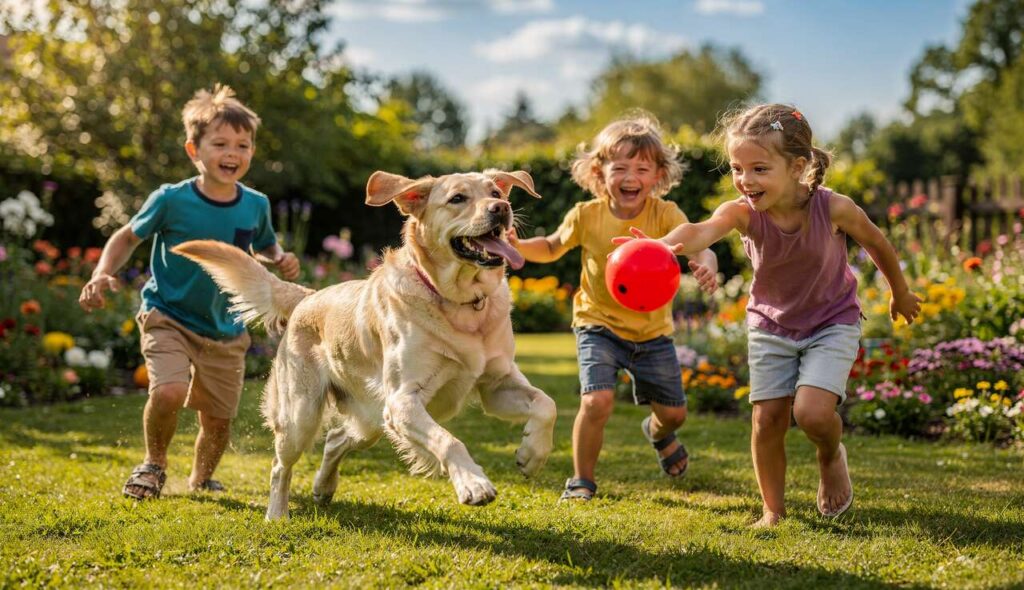
Families searching for a canine companion often find themselves drawn to the labrador retriever, a breed renowned for its friendly disposition and adaptable nature. With young children in the household, selecting the right dog becomes particularly crucial, as parents seek a pet that combines gentleness with resilience. The labrador’s reputation as a family dog has been firmly established over decades, yet prospective owners must understand the specific traits and requirements that make this breed either an ideal match or a potential challenge for homes with little ones.
Labrador: a breed suitable for children ?
The labrador’s natural affinity with families
The labrador retriever consistently ranks among the most popular family dogs across the United Kingdom and beyond, a status earned through generations of selective breeding that prioritised temperament alongside working ability. Originally developed as fishing and hunting companions in Newfoundland, these dogs were bred to work closely with humans, fostering an innate desire to please and cooperate. This historical background translates directly into their modern role as patient and tolerant family members, particularly when properly socialised from puppyhood.
Research conducted by canine behaviour specialists demonstrates that labradors exhibit remarkably low aggression levels compared to many other breeds. Their stable temperament makes them less likely to react negatively to the unpredictable movements and sounds that young children naturally produce. The breed’s physical robustness also proves advantageous, as labradors can withstand the enthusiastic hugs and occasional rough handling that toddlers might inadvertently deliver without becoming defensive or fearful.
Considerations for families with very young children
Whilst labradors possess many qualities that make them excellent family dogs, certain practical considerations warrant attention. Their size and energy levels during the puppy and adolescent stages can present challenges in households with toddlers. A young labrador’s exuberance might accidentally knock over small children, not from aggression but simply from unbridled enthusiasm. Families must weigh whether they possess the time and resources to manage both a boisterous puppy and young children simultaneously.
- Puppies require consistent training and supervision
- Young labradors may inadvertently cause injuries through jumping or pulling
- The breed’s size demands adequate space for exercise and play
- Financial considerations include food, veterinary care, and training expenses
Understanding these breed-specific characteristics provides the foundation for evaluating whether a labrador suits your family’s particular circumstances.
The characteristics of the labrador
Physical attributes and size
Adult labradors typically stand between 55 and 62 centimetres at the shoulder, with males generally larger than females. Weight ranges from approximately 25 to 36 kilograms, making them medium to large dogs that require sufficient space both indoors and outdoors. Their dense, water-resistant double coat comes in three recognised colours: black, yellow, and chocolate, each requiring regular grooming to manage shedding.
| Characteristic | Male | Female |
|---|---|---|
| Height | 57-62 cm | 55-60 cm |
| Weight | 29-36 kg | 25-32 kg |
| Life expectancy | 10-12 years | 10-12 years |
Health considerations
Responsible breeders screen for hereditary conditions including hip and elbow dysplasia, progressive retinal atrophy, and exercise-induced collapse. Families should request health clearances for both parents before acquiring a puppy. The breed’s tendency towards obesity requires careful dietary management, particularly important in households where children might be tempted to share snacks with their canine friend.
The labrador’s physical makeup and health profile directly influence how they interact with family members, particularly the youngest ones.
Temperament and behaviour with young children
Innate gentleness and patience
Labradors demonstrate a remarkable tolerance for the unpredictable behaviour that characterises young children. Their patient nature allows them to endure ear pulling, tail grabbing, and interrupted naps with minimal complaint. This breed possesses an intuitive understanding of vulnerability, often displaying extra gentleness around babies and toddlers. Many owners report their labradors naturally moderating their energy levels when interacting with small children, whilst maintaining playful enthusiasm with older family members.
Playfulness and companionship
The labrador’s playful disposition makes them excellent playmates for children as they grow. These dogs genuinely enjoy participating in family activities, whether fetching balls in the garden, accompanying walks to the park, or simply lying nearby during quiet time. Their social nature means they thrive on interaction rather than solitary existence, making them ideal for families who can provide regular companionship.
- Natural retrieving instinct makes fetch games endlessly entertaining
- Swimming ability allows for water-based activities during warmer months
- Gentle mouth enables safe play with toys and objects
- Protective instincts balanced with friendliness towards visitors
Potential behavioural challenges
Despite their many positive traits, labradors can develop problematic behaviours without proper guidance. Their enthusiasm for food can lead to counter-surfing or stealing from children’s hands. Separation anxiety may emerge if the dog becomes overly dependent on constant human presence. Mouthing behaviour, whilst not aggressive, requires correction during puppyhood to prevent unintentional harm to delicate skin.
These temperamental qualities, when properly channelled through training, create the foundation for a harmonious relationship between dog and child.
Ease of training and obedience
Intelligence and willingness to learn
Labradors rank among the most trainable breeds, combining intelligence with an eagerness to please that facilitates the learning process. Their food motivation makes positive reinforcement training particularly effective, as they readily perform desired behaviours in exchange for treats or praise. This trainability proves invaluable in families with children, as reliable obedience commands ensure safety and control in various situations.
Essential training for family environments
Families with young children should prioritise specific training objectives that promote safe interactions. Teaching a solid recall command prevents the dog from overwhelming excited children during play. The “leave it” command protects both dog and child from inappropriate object exchanges. Impulse control exercises help manage the breed’s natural exuberance, reducing jumping and excessive excitement.
- Basic obedience: sit, stay, down, come
- Loose-lead walking to prevent pulling with pushchairs
- Door manners to avoid knocking over small children
- Calm greetings to reduce jumping behaviour
- Appropriate play boundaries with toys and food
Professional training classes offer dual benefits: educating the dog whilst teaching family members effective handling techniques. Many programmes now include child-friendly elements that help youngsters learn safe interaction methods.
A well-trained labrador becomes a more predictable and manageable family member, but training alone cannot compensate for unmet physical needs.
The labrador and exercise needs
Daily activity requirements
Adult labradors require substantial daily exercise, typically between 90 minutes to two hours of physical activity. This need encompasses walks, play sessions, swimming, and mental stimulation through training or puzzle toys. Insufficient exercise leads to destructive behaviours, excessive barking, and hyperactivity that proves incompatible with peaceful family life.
Balancing exercise with family life
Families must honestly assess whether their lifestyle accommodates these considerable exercise demands. Parents managing young children may struggle to provide adequate activity, particularly during inclement weather or when juggling multiple commitments. However, creative solutions exist: involving older children in dog-walking routines, utilising secure gardens for play sessions, and incorporating the dog into family outings.
| Age | Exercise duration | Type of activity |
|---|---|---|
| Puppy (3-6 months) | 15-30 minutes | Short walks, gentle play |
| Adolescent (6-18 months) | 45-90 minutes | Structured walks, training, supervised play |
| Adult (18 months+) | 90-120 minutes | Vigorous exercise, swimming, retrieval games |
Meeting these exercise requirements ensures a calmer, more content dog that integrates smoothly into family routines, but physical activity alone does not guarantee successful cohabitation.
Precautions and advice for harmonious cohabitation
Establishing safe interaction rules
Creating a positive relationship between labrador and children requires clear boundaries and consistent supervision. Never leave young children and dogs together unsupervised, regardless of the dog’s temperament. Teach children to respect the dog’s space, particularly during meals, sleep, and when the dog retreats to a designated safe area.
- Supervise all interactions between dogs and children under five years
- Establish a dog-free zone where the labrador can retreat undisturbed
- Teach children appropriate touching: gentle stroking rather than grabbing
- Involve children in care routines appropriate to their age
- Never allow children to disturb a sleeping or eating dog
Preparing the home environment
Practical preparations facilitate smoother integration. Secure baby gates create separate spaces when needed, whilst providing the dog visual contact with family members. Elevated feeding stations prevent toddlers from interfering with meals. Adequate chew toys redirect natural mouthing behaviours away from children’s belongings.
Timing the addition of a labrador
Families should carefully consider timing when adding a labrador to their household. Acquiring a puppy simultaneously with welcoming a newborn creates overwhelming demands. Many experts recommend waiting until children reach at least three years old, when they can understand basic safety rules and parents have established routines. Alternatively, adopting an adult labrador with proven child-friendly temperament may suit families with very young children.
The labrador retriever offers families numerous advantages as a companion for children, combining gentleness, trainability, and playfulness in a robust package. Their patient temperament and eagerness to please create natural compatibility with young family members. However, prospective owners must realistically assess their capacity to meet the breed’s considerable exercise needs, provide consistent training, and supervise interactions during the critical early years. With proper preparation, clear boundaries, and ongoing commitment, a labrador can become not merely a pet but a cherished family member who enriches childhood experiences and teaches valuable lessons about responsibility, empathy, and companionship.