



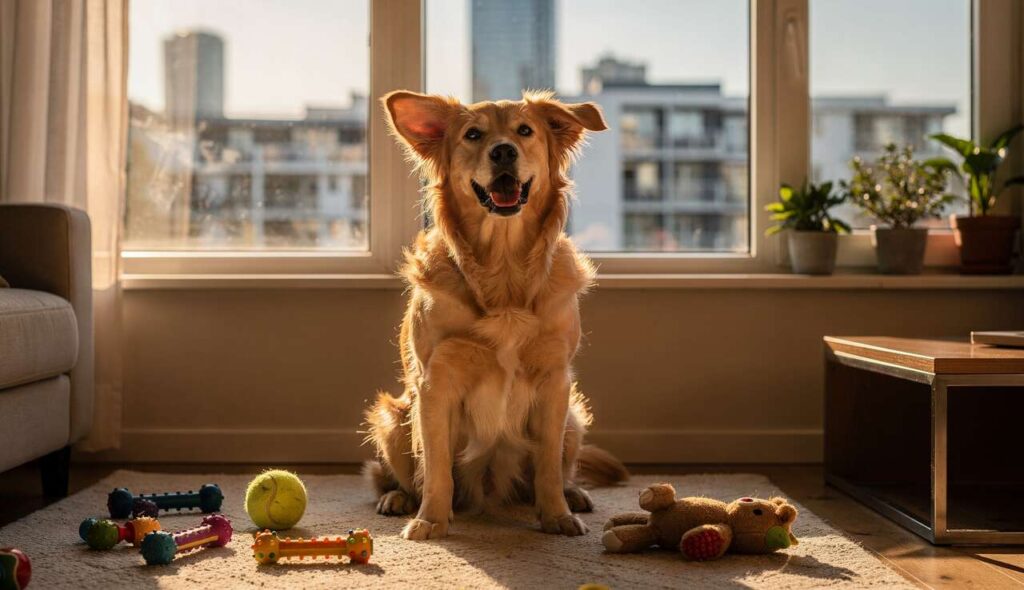
Urban living presents unique challenges for dog owners, particularly when it comes to keeping their canine companions mentally stimulated. Whilst many prospective pet owners worry about the physical constraints of flat dwelling, research increasingly suggests that psychological enrichment matters far more than square footage. A dog confined to a spacious house with nothing to do will suffer more than one in a compact flat with an engaged, attentive owner. Understanding this distinction is crucial for anyone considering dog ownership in an apartment setting, as boredom can manifest in anxiety, depression, and behavioural problems that affect both the animal’s wellbeing and the household’s harmony.
The Challenges of Boredom in Apartment Dogs
Recognising the Signs of Canine Boredom
Dogs experiencing chronic boredom exhibit a range of symptoms that owners must learn to identify. Excessive barking, whining, and howling often signal a dog’s frustration with their unstimulating environment. Other indicators include pacing, restlessness, and an inability to settle even after physical exercise. Some dogs develop repetitive behaviours such as tail chasing or excessive licking, which can escalate into compulsive disorders if left unaddressed.
- Destructive chewing of furniture, shoes, or household items
- Digging at carpets or attempting to scratch through doors
- Attention-seeking behaviours that become increasingly demanding
- Depression manifesting as lethargy or loss of appetite
- Hyperactivity when the owner returns home
Why Apartments Intensify Boredom
The apartment environment creates specific challenges that exacerbate boredom. Limited visual stimulation means dogs cannot watch wildlife, passing pedestrians, or neighbourhood activities that would naturally engage their attention. Acoustic isolation reduces the variety of sounds that would otherwise provide mental engagement throughout the day. Furthermore, the absence of a garden eliminates opportunities for independent exploration, sniffing, and the natural foraging behaviours that occupy a dog’s mind.
| Environmental Factor | Impact on Mental Stimulation |
|---|---|
| Lack of garden access | Eliminates 60-70% of natural exploratory behaviour |
| Limited window views | Reduces visual stimulation by approximately 40% |
| Restricted social interaction | Decreases daily canine encounters by 80% |
These environmental limitations mean that apartment dogs rely almost entirely on their owners for mental enrichment, making proactive engagement essential rather than optional.
Activities to Stimulate Your Dog Without Outdoor Space
Indoor Games That Challenge the Mind
Mental stimulation can be achieved through various indoor activities that engage a dog’s natural instincts. Scent work games prove particularly effective, as a dog’s sense of smell is their primary way of understanding the world. Hide treats throughout the flat and encourage your dog to find them, gradually increasing difficulty by using containers or puzzle toys. The “find it” game can occupy a dog for extended periods whilst satisfying their foraging instinct.
- Hide-and-seek with family members or favourite toys
- Indoor fetch using soft toys in hallways
- Tug-of-war sessions with appropriate rope toys
- Teaching new tricks or commands during short training sessions
- Food-dispensing puzzle toys that require problem-solving
Enrichment Through Training and Learning
Regular training sessions provide cognitive stimulation that tires dogs mentally far more effectively than physical exercise alone. Dedicate fifteen minutes twice daily to teaching new commands, refining existing ones, or introducing complex sequences. Dogs thrive on the mental challenge of learning, and the structured interaction strengthens the bond between owner and pet whilst combating boredom.
Understanding how to keep dogs mentally engaged naturally leads to considering their social needs, which prove equally crucial in confined living spaces.
The Importance of Socialisation for Dogs in Limited Space
Why Social Interaction Matters More in Apartments
Dogs are inherently social creatures, and isolation intensifies in apartment settings where chance encounters with other dogs are rare. Without regular social interaction, dogs can develop anxiety, fear-based aggression, or inappropriate excitement when they do encounter other animals. The psychological impact of social deprivation often exceeds that of physical confinement, making deliberate socialisation efforts essential.
Creating Socialisation Opportunities
Apartment dwellers must actively seek social experiences for their dogs. Scheduled playdates with compatible dogs provide controlled social interaction whilst allowing owners to monitor behaviour. Dog parks, when used appropriately, offer opportunities for varied social encounters, though supervision remains critical. Consider these structured approaches:
- Joining local dog walking groups that meet regularly
- Enrolling in group training classes for dual benefits of learning and socialising
- Arranging regular visits with dog-owning friends or family
- Utilising doggy daycare services once or twice weekly
- Participating in canine sports clubs appropriate for your dog’s breed and energy level
| Socialisation Method | Frequency Recommended | Primary Benefit |
|---|---|---|
| Dog park visits | 3-4 times weekly | Varied social encounters |
| Playdates | 2-3 times weekly | Controlled, quality interaction |
| Training classes | Weekly | Structured socialisation with learning |
Proper socialisation not only enriches a dog’s life but also prevents many of the problematic behaviours that emerge from frustration and understimulation.
How to Prevent Destructive Behaviour Due to Boredom
Understanding the Root Causes
Destructive behaviour rarely stems from malice; rather, it represents a dog’s attempt to self-soothe or create stimulation in an unstimulating environment. Chewing releases endorphins that calm anxious dogs, whilst digging and scratching mimic natural behaviours that would normally occupy their time. Recognising these actions as symptoms rather than deliberate misbehaviour allows owners to address the underlying boredom effectively.
Proactive Prevention Strategies
Prevention requires a multi-faceted approach that addresses both environmental factors and the dog’s daily routine. Environmental enrichment should include rotating toys to maintain novelty, providing appropriate chewing outlets, and creating designated activity zones within the flat. Establishing a predictable routine reduces anxiety whilst ensuring regular stimulation throughout the day.
- Provide durable chew toys and replace them before they become boring
- Use food-dispensing toys during periods when the dog is alone
- Ensure adequate physical exercise before leaving the dog unattended
- Consider background noise such as radio or television to reduce isolation
- Implement crate training as a safe, comfortable space rather than punishment
- Schedule midday walks or employ a dog walker for extended absences
Addressing destructive tendencies requires understanding the comprehensive solutions available to apartment-dwelling dog owners.
Solutions to Keep a Dog Active in an Apartment
Creating a Stimulating Indoor Environment
Transforming an apartment into an enriching space requires thoughtful planning and creativity. Vertical space utilisation can expand a dog’s territory, with window perches allowing visual stimulation from outdoor activity. Designate specific areas for different activities: a feeding zone with puzzle feeders, a play area with rotating toys, and a quiet resting space. This zoning helps dogs understand their environment and provides structure to their day.
Technology and Modern Solutions
Contemporary pet care technology offers innovative solutions for apartment dogs. Automated treat dispensers can be programmed to release rewards at intervals, maintaining engagement throughout the day. Interactive cameras allow owners to check on their pets and even dispense treats remotely. Some devices feature games that dogs can play independently, responding to the animal’s actions with rewards.
| Solution Type | Cost Range | Effectiveness Rating |
|---|---|---|
| Puzzle feeders | £10-£40 | High for meal times |
| Interactive cameras | £80-£200 | Moderate for monitoring |
| Automated toys | £30-£100 | Moderate to high |
| Dog walker services | £15-£25 per walk | Very high |
Balancing Physical and Mental Exercise
Whilst physical exercise remains important, mental stimulation often proves more exhausting for dogs and more practical in apartment settings. A fifteen-minute training session can tire a dog as effectively as a thirty-minute walk. Combining both approaches creates a comprehensive activity programme: morning walks for physical exercise, midday mental challenges through puzzle toys, and evening training or play sessions before settling for the night.
Successful apartment dog ownership hinges on recognising that space limitations need not compromise a dog’s quality of life. The commitment to providing consistent mental stimulation, regular socialisation, and environmental enrichment transforms potential challenges into manageable routines. Dogs adapt remarkably well to apartment living when their psychological needs receive the same attention as their physical requirements. By implementing structured activities, maintaining social connections, and preventing boredom through proactive engagement, owners can ensure their canine companions thrive regardless of square footage. The key lies not in the size of the home but in the quality of care, attention, and enrichment provided within it.