



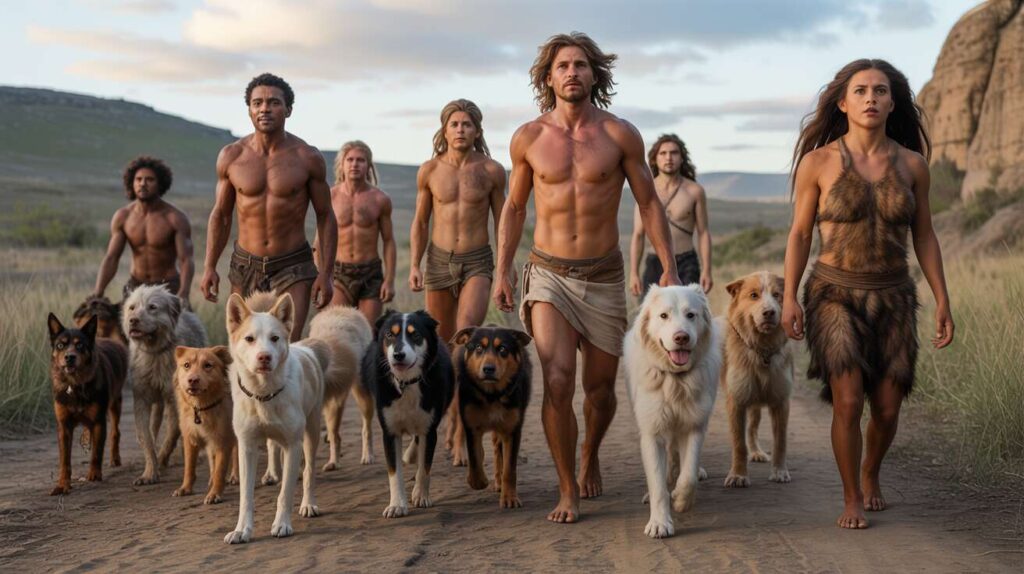
The bond between humans and dogs stretches back through millennia, revealing a partnership that has profoundly shaped both species. Archaeological evidence and genetic research now demonstrate that the remarkable variety of dogs we observe today has roots extending approximately 10,000 years into our shared past. During this pivotal period, dogs roamed alongside human bands, already displaying a striking array of shapes and sizes that challenges our assumptions about when and how canine diversity emerged. This ancient relationship represents far more than simple domestication; it reflects a complex evolutionary journey influenced by environment, culture, and mutual adaptation.
The origins of modern canine diversity
Skeletal evidence spanning millennia
Comprehensive research examining 643 dog and wolf skulls across a 50,000-year timeline has illuminated the emergence of modern canine diversity. This extensive skeletal analysis provides concrete evidence that the distinctive skull shape we associate with dogs first appeared approximately 11,000 years ago, coinciding with the Holocene epoch that followed the last ice age. The transition from wolf-like cranial structures to recognisably canine features marks a critical evolutionary threshold in the domestication process.
Unexpected early variation
Perhaps most surprisingly, scientists discovered significant physical diversity amongst dog skulls from the same historical period. This finding fundamentally challenges the assumption that breed variation resulted primarily from recent selective breeding practices. The data reveals:
- Multiple distinct skull morphologies existing simultaneously in ancient populations
- Variation patterns suggesting environmental and functional adaptations
- Evidence of diverse body sizes and proportions dating to prehistoric times
- Skeletal features indicating specialised roles within human communities
This early morphological diversity suggests that the foundations of modern breed characteristics were established far earlier than previously recognised. The variety observed in ancient remains indicates that human communities may have already begun selecting for specific traits based on functional requirements and aesthetic preferences thousands of years before formal breed development.
Understanding these skeletal patterns provides essential context for examining how dogs actually lived alongside ancient human populations.
Companions on the road with ancient humans
Mobile partnerships across landscapes
Dogs travelled with bands of humans across diverse terrains, forming mobile partnerships that proved mutually beneficial. Unlike the sedentary agricultural societies that would later emerge, these early human groups maintained nomadic or semi-nomadic lifestyles, and dogs adapted to this constant movement. The relationship extended beyond mere companionship, encompassing practical cooperation in hunting, protection, and potentially transport of goods.
Functional roles in ancient communities
Archaeological evidence suggests dogs fulfilled multiple essential functions within prehistoric human societies:
- Assisting in tracking and pursuing game animals
- Providing early warning systems against predators and rival groups
- Offering warmth during cold periods through body heat
- Consuming waste materials, thereby maintaining camp hygiene
- Serving as companions that strengthened social bonds within groups
The variety of shapes and sizes observed in ancient dog populations likely reflects these diverse roles. Larger, more robust dogs may have excelled at guarding and hunting large prey, whilst smaller, more agile individuals could have specialised in pursuing smaller game or fitting into confined spaces during hunts. This functional differentiation laid the groundwork for later breed specialisation.
These practical partnerships set the stage for the evolutionary processes that would shape canine populations over subsequent millennia.
The evolution of dog breeds 10,000 years ago
Genetic insights from Eastern Eurasia
DNA analysis of dogs likely to have inhabited Eastern Eurasia during this period provides complementary evidence to skeletal studies. Genetic research reveals patterns of diversity that confirm the antiquity of breed differentiation. The molecular data demonstrates that population splitting and genetic divergence amongst dog lineages occurred far earlier than conventional breeding programmes, indicating natural selection and early human preferences both played roles in shaping canine populations.
Environmental and cultural influences
The development of distinct dog types 10,000 years ago resulted from an interplay of multiple factors:
| Influencing Factor | Impact on Canine Evolution |
|---|---|
| Climate and geography | Selected for size, coat type, and physical endurance |
| Available prey species | Influenced hunting styles and body proportions |
| Human cultural practices | Determined functional requirements and aesthetic preferences |
| Isolation of populations | Promoted genetic differentiation between groups |
These combined pressures created a dynamic evolutionary environment where both natural selection and human influence operated simultaneously. Dogs adapted to local conditions whilst also responding to the specific needs and preferences of the human communities they accompanied. This dual selective pressure accelerated diversification, producing the variety documented in archaeological remains.
These findings compel us to reconsider fundamental assumptions about canine domestication and development.
Redefining our understanding of dogs
Challenging conventional timelines
Traditional narratives positioned intensive selective breeding as a relatively recent phenomenon, primarily associated with Victorian-era kennel clubs and formalised breed standards. However, evidence now demonstrates that significant diversification predates these modern developments by thousands of years. The recognition that ancient dogs already exhibited substantial morphological variation fundamentally alters our comprehension of the domestication timeline and process.
Ancient selection versus modern breeding
Distinguishing between ancient selection practices and contemporary breeding programmes reveals important differences:
- Ancient selection focused primarily on functional capabilities rather than aesthetic standardisation
- Early diversification occurred more gradually across generations
- Geographic isolation naturally promoted distinct regional types
- Modern breeding intensified specific traits through controlled reproduction
- Contemporary breeds represent refinements of ancient foundational types
This perspective suggests that many modern breeds may represent elaborations of ancient lineages rather than entirely novel creations. The variety we observe today builds upon foundations established millennia ago, when dogs first began adapting to diverse environments and human requirements. Understanding this continuity enriches our appreciation of both ancient and modern canine populations.
This revised understanding illuminates the deeper historical context of human-canine relationships.
The relationships between humans and dogs in history
A partnership spanning ten millennia
The connection between humans and dogs represents one of the most enduring interspecies relationships in history. Over approximately 10,000 years, this partnership evolved from initial cooperation to the profound bond observed today. Dogs transitioned from opportunistic scavengers at the edges of human settlements to fully integrated members of human societies, adapting their behaviour, physiology, and psychology to complement human needs.
Global presence and population
Today, an estimated 700 million dogs live with or around humans worldwide, testament to the success and adaptability of this ancient partnership. This remarkable population reflects:
- Dogs’ exceptional ability to thrive in diverse human environments
- The continuing functional and emotional value dogs provide
- Cultural variations in how different societies integrate dogs
- The resilience of the human-canine bond across changing circumstances
The relationship has proven remarkably flexible, adapting to agricultural revolutions, urbanisation, industrialisation, and technological advancement. Throughout these transformations, dogs have consistently found new roles and maintained their position as valued companions and workers. This adaptability stems from the deep evolutionary partnership established thousands of years ago, when dogs first began their journey alongside human bands.
Cultural and evolutionary implications
Research demonstrates that canine diversity results from the complex interaction of human cultures, environments, and evolutionary processes. This multifaceted influence has shaped not only physical characteristics but also behavioural traits, cognitive abilities, and social tendencies. Different human societies developed distinct dog types suited to their specific needs, creating a global tapestry of canine variation that reflects human cultural diversity as much as biological evolution.
The revelations emerging from skeletal and genetic research fundamentally transform our understanding of when and how dogs became the diverse species we recognise today. Far from being a recent development, canine diversity extends back to the earliest periods of domestication, when dogs already exhibited the variety of forms that would eventually give rise to modern breeds. This ancient partnership, forged approximately 10,000 years ago, established patterns of cooperation and adaptation that continue to define the human-canine relationship. Recognising the depth and complexity of this shared history enriches our appreciation of dogs not merely as products of human design but as co-evolutionary partners whose journey alongside us has shaped both species profoundly.