



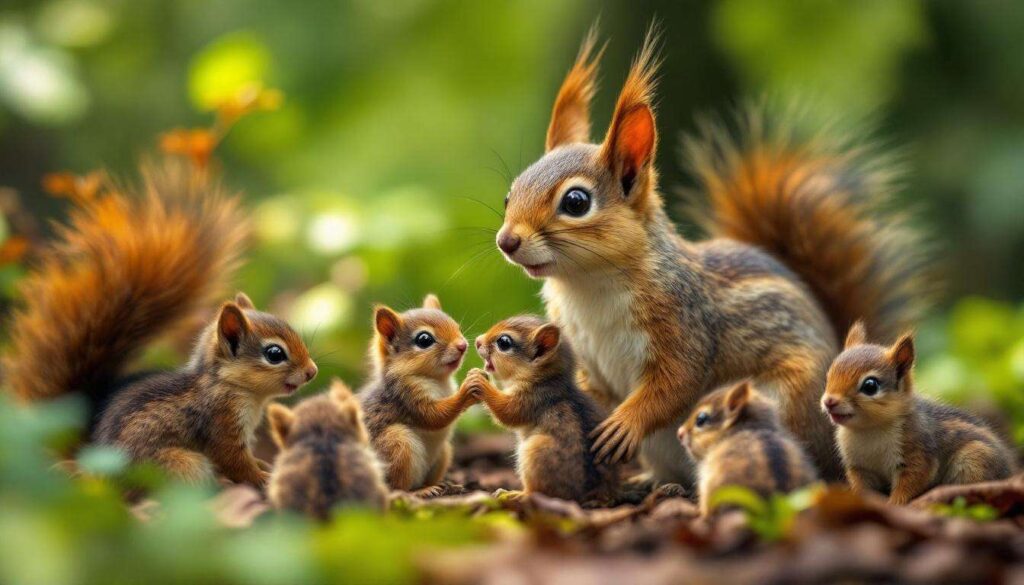
Squirrels are amongst the most recognisable mammals in British gardens and woodlands, their bushy tails and acrobatic antics providing endless entertainment for observers. Yet beneath this charming exterior lies a remarkably efficient reproductive system that ensures the continuation of their species. Understanding the breeding habits of female squirrels reveals not only the biological imperatives driving these creatures but also the challenges they face in maintaining viable populations. The question of how many offspring a female squirrel can produce annually involves examining breeding cycles, litter frequencies, and the various environmental factors that influence reproductive success.
Reproduction cycle of squirrels
Seasonal breeding patterns
Female squirrels, particularly the grey squirrel commonly found throughout the UK, exhibit two distinct breeding periods during the calendar year. The first mating season occurs during winter, typically spanning from December through February, whilst the second takes place in summer between June and August. This biannual pattern allows squirrels to maximise their reproductive output whilst aligning births with periods of abundant food resources.
During these breeding windows, female squirrels enter oestrus for only brief periods, often lasting just a single day. This limited fertility window creates intense competition amongst males, who can detect receptive females from considerable distances through scent marking and vocalisation.
Gestation and birth timing
Following successful mating, the gestation period for squirrels proves remarkably brief compared to many mammals of similar size. The pregnancy typically lasts between 30 to 50 days, with most sources citing 40 to 44 days as the average duration. This relatively short gestation enables squirrels to produce multiple litters within a single year without excessive physiological strain.
| Breeding period | Mating months | Birth months |
|---|---|---|
| First litter | December to February | March to April |
| Second litter | June to August | August to September |
The timing of these births proves crucial for kit survival, as spring and late summer provide optimal conditions with warmer temperatures and increased food availability. This reproductive strategy demonstrates the species’ adaptation to temperate climates and seasonal resource fluctuations.
Number of annual litters
Typical breeding frequency
Under favourable conditions, a healthy female squirrel can produce two litters per year. This dual breeding pattern represents the standard reproductive output for grey squirrels in the UK, though not all females successfully achieve this maximum. Various factors including age, health status, and environmental conditions determine whether an individual female will breed once, twice, or not at all during a given year.
Younger females in their first breeding season often produce only a single litter, whilst mature females in their reproductive prime typically manage both spring and summer births. Older females may also revert to single-litter patterns as their fertility naturally declines.
Variations in breeding success
Several circumstances can influence the actual number of litters a female produces:
- Nutritional status and body condition prior to breeding season
- Success or failure of previous litters affecting subsequent breeding attempts
- Population density and availability of suitable nesting sites
- Weather conditions during critical mating periods
- Predation pressure and disturbance levels in the territory
In years of exceptional food abundance, particularly following bumper crops of acorns, beechnuts, or hazelnuts, breeding rates tend to increase across the population. Conversely, during periods of scarcity or environmental stress, many females may forgo reproduction entirely or produce only a single litter. These patterns illustrate how squirrel populations naturally regulate themselves in response to resource availability.
Average litter size
Typical kit numbers
The number of offspring born in each litter varies considerably, though most female squirrels produce between 2 to 5 babies, commonly referred to as kits or kittens. The most frequently observed litter sizes contain approximately 2 to 4 kits, representing the norm for healthy breeding females under standard conditions.
Research indicates that first litters of the year tend to be slightly larger on average than second litters, possibly due to the female’s improved body condition following winter feeding and the longer daylight hours supporting lactation demands.
Exceptional cases and extremes
Whilst the average remains relatively consistent, exceptional cases have been documented where females produce significantly larger litters. Observations have recorded litters reaching 8 to 12 young in rare circumstances, though such occurrences remain uncommon. These unusually large litters present considerable challenges for maternal care, as providing adequate nutrition and protection for so many dependent offspring strains even the most capable mothers.
| Litter size category | Number of kits | Frequency |
|---|---|---|
| Small | 1-2 | Common |
| Average | 3-5 | Most frequent |
| Large | 6-7 | Occasional |
| Exceptional | 8-12 | Rare |
Development of newborn kits
Regardless of litter size, all kits are born in a highly vulnerable state. They emerge completely hairless, blind, and entirely dependent upon their mother for warmth, nutrition, and protection. This altricial development pattern means the mother must remain with her offspring constantly during the first weeks of life.
The developmental timeline follows a predictable pattern:
- Birth to two weeks: completely helpless, eyes closed, no fur
- Three to four weeks: fur begins to develop, eyes remain closed
- Four weeks: eyes begin to open, increased mobility within nest
- Six to eight weeks: approaching weaning, beginning to explore surroundings
- Eight to ten weeks: weaned, learning essential survival skills from mother
This extended dependency period requires substantial maternal investment and helps explain why survival rates among young squirrels remain relatively low despite the species’ reproductive capacity.
Factors influencing reproduction
Environmental and nutritional influences
The availability of food resources stands as perhaps the most critical factor determining reproductive success in squirrel populations. Females require substantial energy reserves to support pregnancy, lactation, and the demanding period of kit-rearing. Years of abundant mast crops from oak, beech, and hazel trees correlate strongly with increased breeding rates and larger litter sizes.
Weather conditions also exert considerable influence on breeding outcomes. Harsh winters can deplete fat reserves, reducing the likelihood of successful spring breeding. Similarly, wet summers may compromise food availability and increase kit mortality through hypothermia and reduced foraging efficiency.
Survival challenges and mortality
Despite producing multiple litters with several kits each, fewer than half of young squirrels reach adulthood. This sobering statistic reflects the numerous threats facing juvenile squirrels:
- Predation by birds of prey, foxes, domestic cats, and other carnivores
- Disease and parasitic infections affecting weakened individuals
- Accidents including falls from trees and road traffic incidents
- Starvation during periods of food scarcity or failed weaning
- Exposure to extreme weather conditions
Human interaction and nesting behaviour
During the critical birthing periods, female squirrels seek secure nesting locations to protect their vulnerable offspring. Whilst natural tree cavities and leafy dreys represent traditional choices, human structures increasingly attract breeding females. Attics, chimneys, and garden sheds provide shelter from predators and weather, though such occupation often creates conflict with homeowners.
This behaviour underscores the adaptability of squirrels to urban and suburban environments, yet also highlights conservation challenges as human development continues to alter natural habitats. Understanding these reproductive patterns becomes essential for wildlife management and promoting coexistence between humans and squirrel populations.
Differences between squirrel species
Grey versus red squirrels
The grey squirrel, introduced to Britain from North America, demonstrates notably different reproductive characteristics compared to the native red squirrel. Grey squirrels typically produce larger litters and achieve higher breeding success rates, contributing to their competitive advantage over red squirrels in shared habitats.
Red squirrels generally produce slightly smaller litters averaging 2 to 4 kits, and in northern regions often manage only a single litter annually due to harsher climatic conditions and reduced food availability. This reproductive disadvantage, combined with disease susceptibility, has contributed to the dramatic decline of red squirrel populations across much of Britain.
Geographic and climatic variations
Squirrel reproductive patterns vary considerably across different geographic regions and climate zones. Populations in southern England, benefiting from milder winters and longer growing seasons, consistently achieve higher rates of two-litter years compared to Scottish populations facing more challenging environmental conditions.
These geographic differences extend beyond British borders, with squirrel species worldwide exhibiting reproductive strategies adapted to their specific ecological niches and environmental pressures.
Female squirrels possess remarkable reproductive capacity, with the potential to produce two litters annually containing between 2 to 5 kits each, resulting in a theoretical maximum of 10 offspring per year. However, actual reproductive success depends heavily on environmental conditions, food availability, and individual health status. The high mortality rate among juvenile squirrels, with fewer than half reaching maturity, demonstrates that reproductive quantity does not guarantee population growth. Understanding these breeding patterns provides valuable insights into squirrel ecology and informs conservation efforts, particularly regarding the ongoing challenges facing native red squirrel populations competing with the more reproductively successful grey squirrels.