



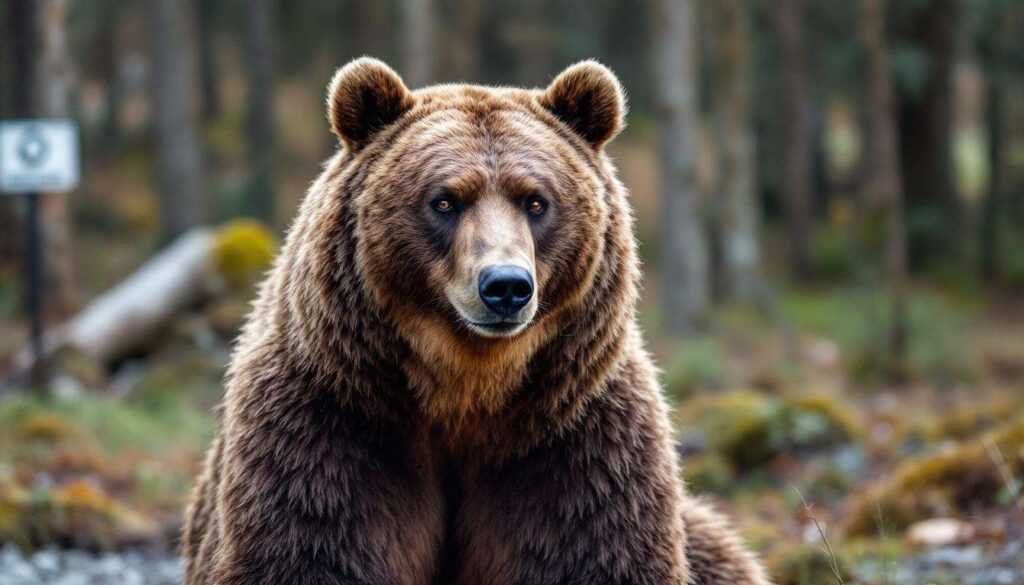
Brown bears have long captivated researchers and wildlife enthusiasts alike, but few populations are as intriguing as those dwelling in the Apennine mountains of central Italy. These remarkable creatures, known scientifically as Apennine brown bears, have undergone a unique evolutionary journey shaped by centuries of proximity to human settlements. Recent scientific investigations have unveiled compelling evidence that these bears exhibit significantly reduced aggression compared to their counterparts across Europe and North America, a transformation attributed largely to sustained coexistence with people.
Italian brown bears: a fascinating evolution
Origins and historical isolation
The Apennine brown bear population has inhabited the mountainous regions of central Italy since at least the time of the Roman Empire. These bears became genetically isolated from other European brown bear populations approximately 2,000 to 3,000 years ago, a separation that persisted for roughly 1,500 years. This isolation occurred primarily due to:
- Rapid expansion of agricultural activities throughout the Italian peninsula
- Increasing human population density in the region
- Geographical barriers created by human development
- Habitat fragmentation resulting from land conversion
Morphological transformations
The prolonged separation from other bear populations has resulted in distinctive physical characteristics that set Apennine bears apart. Research published in the journal Molecular Biology and Evolution documented several notable morphological variations including smaller body sizes compared to other brown bear subspecies, unique cranial structures, and distinctive facial features. These physical adaptations represent tangible evidence of evolutionary pressures acting upon this isolated population over millennia.
The genetic analysis of 13 Apennine bears, compared against specimens from Eastern Europe and North America, revealed significant variations in their genome that correlate directly with these physical differences.
Current population status
Today, the Apennine brown bear faces a precarious existence. The population is classified as critically endangered, with approximately 60 individuals remaining in the wild. This small number makes the population particularly vulnerable to genetic bottlenecks and environmental threats, underscoring the urgency of conservation efforts tailored to their unique characteristics.
Understanding these evolutionary adaptations becomes crucial when considering how best to protect this remarkable subspecies whilst maintaining the delicate balance between wildlife conservation and human safety.
Coexistence with humans: a pacifying factor
The role of proximity in behavioural change
Living in close quarters with human populations has fundamentally altered the behavioural patterns of Apennine bears. Unlike their relatives in more remote wilderness areas, these bears have experienced continuous exposure to human activity throughout their evolutionary history. This sustained contact has created selection pressures that favour individuals capable of tolerating human presence without resorting to aggression.
The geographical reality of central Italy, with its dense network of villages and agricultural lands, meant that bears had limited options: adapt to human proximity or face elimination. Those individuals displaying excessive aggression towards people or livestock were systematically removed through hunting, whilst more tolerant bears survived to pass on their genes.
Comparative behavioural analysis
| Characteristic | Apennine Bears | Other Brown Bears |
|---|---|---|
| Aggression levels | Significantly reduced | Higher baseline aggression |
| Human tolerance | Enhanced tolerance | Variable, often lower |
| Body size | Smaller | Larger on average |
| Habitat proximity to humans | Very close | Generally more remote |
Agricultural landscapes as evolutionary crucibles
The transformation of Italian landscapes through agriculture created an environment where only the most adaptable and docile bears could thrive. Bears that raided crops or threatened livestock faced swift retaliation, whilst those that maintained distance and avoided confrontation were more likely to survive and reproduce. This dynamic established a powerful evolutionary force that shaped the population over successive generations.
These behavioural adaptations did not occur in isolation but were intimately connected to genetic changes that researchers have now begun to identify and understand.
Less aggressive brown bears thanks to evolution
Genetic variants linked to temperament
The genomic analysis conducted by researchers identified several genetic variants specifically associated with reduced aggression in Apennine bears. These genetic markers represent tangible evidence of how natural selection, influenced by human presence, has modified the bear population at the molecular level. The genes in question are believed to influence neurological pathways related to stress response and territorial behaviour.
By comparing DNA sequences across different bear populations, scientists pinpointed variations that appear exclusively or predominantly in the Apennine subspecies. These genetic signatures tell the story of a population that has undergone rapid evolutionary change in response to anthropogenic pressures.
Selection pressure mechanisms
The primary mechanism driving this evolutionary shift was straightforward yet profound: selective removal of aggressive individuals. When bears exhibited threatening behaviour towards humans or their property, they were hunted and eliminated from the breeding population. This created a scenario where:
- Aggressive bears had reduced reproductive success
- Docile bears faced fewer threats from human retaliation
- Temperament became a crucial survival trait
- Genetic predisposition towards calmness increased over generations
Timeframe of evolutionary change
The relatively short period of isolation, approximately 1,500 years, demonstrates that significant evolutionary changes can occur more rapidly than previously assumed when selection pressures are strong and consistent. This timeframe, whilst brief in geological terms, encompasses numerous bear generations, providing ample opportunity for genetic shifts to become established within the population.
The genetic evidence supports the theory that human activity has been the principal architect of these changes, but the full picture requires examining the nature of human-bear interactions more closely.
Human interactions: impact on bear behaviour
Historical hunting practices
Throughout Italian history, hunting practices played a decisive role in shaping bear populations. Aggressive bears posed immediate threats to agricultural communities and were prioritised for removal. This selective culling was not random but targeted individuals displaying specific behavioural traits, creating a form of artificial selection that parallels domestication processes observed in other species.
The cumulative effect of centuries of such practices fundamentally altered the behavioural profile of the surviving population, favouring individuals with inherently calmer dispositions.
Modern conservation implications
Understanding these historical interactions carries critical implications for contemporary conservation strategies. Researchers have issued warnings against reintroducing bears from other populations into the Apennine range, as such actions could:
- Introduce genes associated with higher aggression
- Disrupt the evolved gene pool adapted to human proximity
- Increase conflict incidents between bears and local communities
- Undermine centuries of evolutionary adaptation
Community safety considerations
The reduced aggression of Apennine bears represents a valuable asset for communities living within bear habitat. This temperament allows for greater tolerance of bear presence and reduces the likelihood of dangerous encounters. Maintaining this characteristic through careful genetic management becomes essential for ensuring long-term coexistence between humans and bears in densely populated regions.
However, the very success of this evolutionary adaptation presents new challenges as conservation efforts aim to increase bear numbers.
Challenges posed by growing bear populations
Conservation versus genetic integrity
The critically endangered status of Apennine bears creates a complex dilemma for conservationists. With only approximately 60 individuals remaining, the population faces severe genetic bottlenecks and requires intervention to ensure survival. However, traditional approaches such as introducing bears from other regions could compromise the unique genetic adaptations that make this population particularly suited to coexistence with humans.
Balancing population growth and human safety
As conservation programmes seek to increase bear numbers, maintaining the docile temperament that characterises this population becomes increasingly important. Strategies must account for:
- Preserving existing genetic variants associated with reduced aggression
- Avoiding genetic dilution through inappropriate reintroductions
- Monitoring behavioural changes as population density increases
- Ensuring continued community support for conservation efforts
Habitat limitations
The Apennine region, whilst extensive, has finite capacity to support bear populations. Increased numbers inevitably lead to greater human-bear encounters, testing the limits of the population’s evolved tolerance. Managing this expansion requires careful planning to minimise conflicts whilst allowing the population to recover from its perilous state.
These challenges raise profound questions about the long-term trajectory of this unique bear population and its relationship with human communities.
Towards an unintended domestication of Italian brown bears
Parallels with domestication processes
The evolutionary changes observed in Apennine bears bear striking similarities to domestication processes documented in other species. Whilst these bears remain wild animals, the selection pressures they experienced mirror those that transformed wolves into dogs and wild boars into domestic pigs. Key parallels include:
- Selection for reduced aggression and fear responses
- Morphological changes including smaller body size
- Enhanced tolerance of human presence
- Genetic modifications affecting behaviour and temperament
Implications for wildlife management
This phenomenon of unintended domestication challenges traditional concepts of wildlife conservation. It demonstrates that wild populations living near humans may undergo evolutionary changes that make them fundamentally different from their more isolated counterparts. Conservation strategies must recognise and account for these differences rather than treating all members of a species as interchangeable.
Future research directions
The Apennine bear population offers a unique opportunity to study human-wildlife coevolution in real time. Further research could illuminate how other species might adapt to increasing human presence globally, providing insights valuable for managing wildlife in an increasingly anthropogenic world.
The brown bears of Italy’s Apennine mountains represent a remarkable case study in evolutionary adaptation driven by human proximity. Their reduced aggression, shaped by centuries of coexistence and selective pressures, demonstrates how wildlife populations can evolve rapidly in response to anthropogenic influences. The genetic evidence reveals that these behavioural changes are not merely learned responses but are encoded in the bears’ DNA, passed down through generations. With only 60 individuals remaining, preserving this unique population requires conservation strategies that respect their evolutionary history and maintain the genetic traits enabling peaceful coexistence with humans. The lessons learned from Apennine bears extend beyond Italy, offering valuable insights for managing wildlife populations worldwide as human expansion continues to reshape natural habitats and influence the evolutionary trajectories of countless species.