



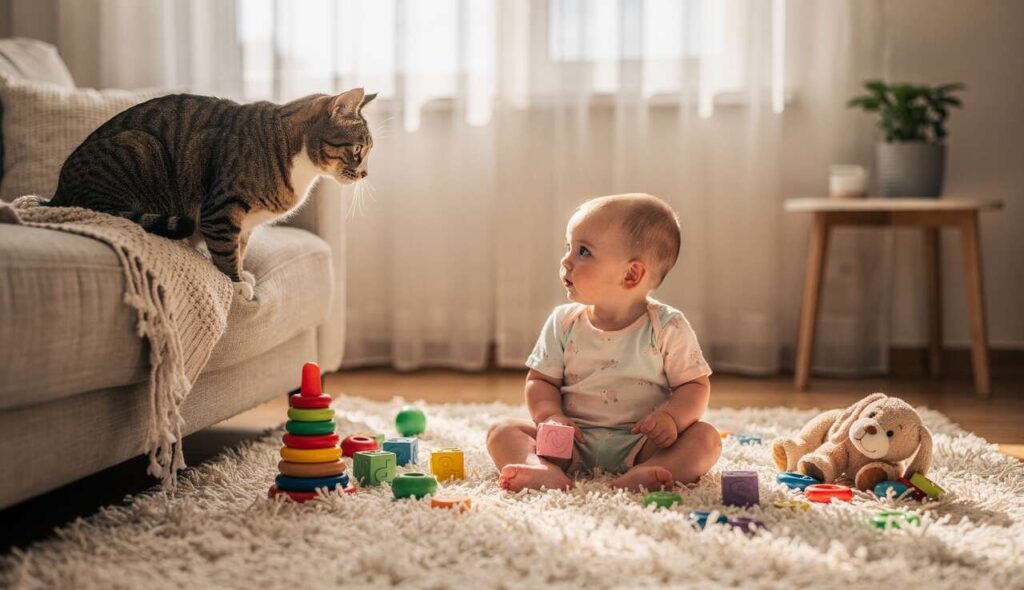
Welcoming a newborn into a household with a resident feline can be both joyful and challenging. Many parents underestimate the adjustments required to ensure harmony between their cat and baby. From mishandling introductions to overlooking basic safety measures, common mistakes can lead to stress for both the animal and the family. Understanding these pitfalls and implementing thoughtful strategies will help create a peaceful environment where both your child and your pet can thrive together.
Introducing the newborn to the baby: precautions to take
Preparing your cat before the baby arrives
One of the most frequent errors parents make is waiting until the baby arrives home to introduce the concept of a new family member. Cats are creatures of habit and sudden changes can trigger anxiety or defensive behaviour. Begin preparations several weeks in advance by gradually introducing baby-related sounds, scents, and equipment into your home.
- Play recordings of baby noises at low volume, gradually increasing over time
- Allow your cat to investigate the nursery and new furniture
- Introduce baby powder and lotion scents on your own skin
- Adjust feeding and play schedules to match post-baby routines
The first meeting: controlled and calm
When bringing your newborn home, resist the temptation to rush the introduction. A common mistake is forcing interaction or allowing the cat unrestricted access immediately. Instead, let your cat approach at their own pace whilst you hold the baby securely. Keep the atmosphere calm and reward your cat with treats and praise for gentle curiosity.
Never shout at or punish your cat for showing interest in the baby, as this creates negative associations. Similarly, don’t exclude your cat entirely from family activities, as this breeds resentment. The key is supervised exposure that allows your cat to adjust gradually whilst maintaining clear boundaries.
With these foundational steps established, attention must turn to creating physical spaces that accommodate both baby and cat safely.
Setting up a safe space for the baby and the cat
Separate zones for rest and play
Parents often make the mistake of assuming their cat will naturally avoid the baby’s sleeping area. However, cats are attracted to warm, cosy spaces and may attempt to sleep in the cot or Moses basket, posing a suffocation risk. Installing physical barriers is essential rather than optional.
| Area | Safety measure | Purpose |
|---|---|---|
| Nursery | Door with secure latch or mesh screen | Prevents unsupervised access |
| Cot | Breathable cot tent or net | Blocks cat entry whilst maintaining airflow |
| Changing area | Raised surface with barriers | Prevents cat jumping up during nappy changes |
Creating cat-only retreats
Equally important is ensuring your cat has sanctuary spaces where they can escape from the baby’s noise and activity. Many parents neglect this aspect, leading to a stressed cat who may act out. Designate quiet areas with elevated perches, hiding spots, and resources that the baby cannot access.
- Install cat shelves or trees in rooms away from the nursery
- Place litter trays in locations the baby won’t reach as they become mobile
- Ensure food and water bowls are in baby-free zones
- Provide covered beds or boxes for undisturbed rest
Once physical spaces are appropriately arranged, ongoing observation of interactions becomes paramount.
Monitoring interactions between the cat and the baby
Never leave them alone together
Perhaps the most critical mistake parents make is assuming their gentle, trustworthy cat poses no risk to their baby. Regardless of temperament, cats are animals with instinctive reactions that can be unpredictable. Even a playful swat or startled jump can cause injury to a fragile infant. Constant supervision is non-negotiable whenever cat and baby are in the same room.
This vigilance must extend beyond the newborn phase. As babies become mobile and begin grabbing, pulling, and pursuing the cat, new dangers emerge. Toddlers lack the understanding to recognise warning signs such as flattened ears, twitching tails, or low growls. A cornered or frightened cat may scratch or bite in self-defence.
Reading your cat’s body language
Many parents fail to recognise the subtle signals that indicate their cat is uncomfortable or stressed around the baby. Understanding feline communication helps prevent incidents before they occur.
- Dilated pupils and flattened ears suggest fear or aggression
- Excessive grooming or hiding indicates stress
- Tail lashing or fur standing on end signals agitation
- Hissing or growling are clear warnings to back away
If you observe these behaviours, separate the cat and baby immediately and give your pet time to decompress. Never force continued interaction when your cat is displaying distress signals.
Beyond behavioural concerns, health considerations require equal attention, particularly regarding allergies.
Preventing allergies: tips to limit risks
Understanding infant allergy development
Some parents mistakenly believe that removing the cat from the home will prevent allergies, whilst others assume early exposure guarantees immunity. The reality is more nuanced. Research suggests that early pet exposure may actually reduce allergy risk in some children, though individual factors vary considerably.
Cat allergens are primarily found in saliva, skin, and urine rather than fur itself. These microscopic proteins become airborne and settle on surfaces throughout the home. For families with a history of allergies or asthma, consulting an allergist before the baby arrives is advisable.
Practical steps to minimise allergen exposure
Rather than rehoming your cat preemptively, implement strategies to reduce allergen levels whilst monitoring your baby for reactions.
- Use HEPA air purifiers in main living areas and the nursery
- Vacuum frequently with a HEPA-filtered cleaner
- Wash hands after handling the cat and before touching the baby
- Keep cats out of the baby’s sleeping area entirely
- Bathe your cat regularly if they tolerate it
- Choose hard flooring over carpets where possible
These measures work best when combined with rigorous hygiene practices throughout the household.
Maintaining hygiene: why it is crucial
Litter tray management
A significant oversight many parents make involves litter tray placement and maintenance. Cat faeces can contain toxoplasma gondii, a parasite particularly dangerous to infants with developing immune systems. Additionally, bacteria from litter can spread throughout the home on cat paws.
| Hygiene practice | Frequency | Importance |
|---|---|---|
| Scoop litter tray | Daily | Reduces parasite exposure |
| Complete litter change | Weekly | Prevents bacterial buildup |
| Disinfect tray | Monthly | Eliminates pathogens |
| Wash hands after handling | Every time | Prevents contamination spread |
Food and water bowl cleanliness
Cat feeding areas can harbour bacteria that pose risks to crawling babies. Position bowls in areas inaccessible to infants and clean them daily with hot, soapy water. Store cat food securely to prevent curious toddlers from sampling kibble or wet food, which may contain bacteria their systems cannot handle.
Whilst physical health concerns demand attention, the emotional wellbeing of your cat requires equal consideration.
Beware of jealousy: how to reassure your cat
Recognising signs of feline jealousy
Cats may not experience jealousy identically to humans, but they certainly notice when their routine and attention levels change dramatically. Parents often make the mistake of showering all their focus on the newborn whilst inadvertently neglecting their cat’s emotional needs. This can manifest in problematic behaviours.
- Inappropriate urination or defecation outside the litter tray
- Excessive vocalisation or attention-seeking behaviour
- Aggression towards family members
- Destructive scratching or chewing
- Withdrawal and depression
Maintaining your cat’s routine and bond
The solution lies in making your cat feel valued despite the new arrival. Set aside dedicated time each day for one-on-one interaction with your cat, even if just ten minutes of play or grooming. Involve your cat in baby-related activities where appropriate, such as sitting nearby during feeding times whilst receiving gentle strokes.
Consider these reassurance strategies: provide extra treats when the baby is present to create positive associations, maintain consistent feeding and play schedules, and enlist help from partners or family members to ensure your cat receives adequate attention when you’re occupied with infant care.
Successfully integrating a cat and baby requires thoughtful planning, consistent boundaries, and ongoing attention to both physical safety and emotional wellbeing. By avoiding these common mistakes, families can foster a harmonious household where both child and cat flourish. The effort invested in proper introductions, safe spaces, vigilant supervision, allergy prevention, rigorous hygiene, and emotional reassurance pays dividends in creating lasting bonds between your baby and your feline companion.