



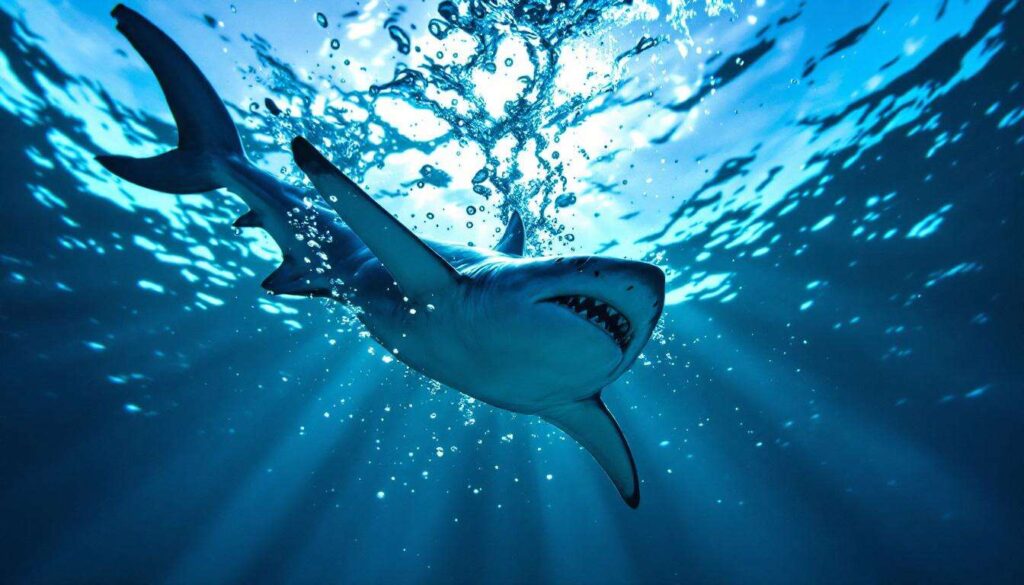
Researchers have uncovered remarkable insights into a peculiar defensive mechanism exhibited by sharks when subjected to physical manipulation. The phenomenon, known as tonic immobility, represents a temporary state of paralysis that can be triggered through surprisingly simple means. This natural reflex has captured the attention of marine biologists seeking to understand both its physiological basis and its evolutionary significance. The behaviour has also proven invaluable for scientific research and conservation efforts, though its implications for shark welfare remain a subject of ongoing investigation.
Paralysis in sharks: a surprising phenomenon
The discovery of shark paralysis
Marine scientists first documented the unusual paralysed state in sharks during field observations and research activities. When certain shark species are physically restrained or positioned in specific orientations, they enter a cataleptic state characterised by muscular rigidity and suppressed motor responses. This reaction occurs across numerous species, from small dogfish to larger predatory sharks, suggesting a widespread biological mechanism.
The phenomenon manifests through several observable characteristics:
- Complete cessation of voluntary movement
- Reduced respiratory rate
- Straightening of the body
- Relaxation of jaw muscles
- Duration ranging from several seconds to fifteen minutes or longer
Species susceptibility variations
Different shark species demonstrate varying degrees of susceptibility to this paralysed state. Lemon sharks, tiger sharks, and reef sharks exhibit particularly pronounced responses, whilst others show more resistance to the induction methods. These variations have prompted researchers to investigate the underlying neurological and physiological factors that determine individual and species-specific responses.
| Shark Species | Susceptibility Level | Average Duration |
|---|---|---|
| Lemon Shark | High | 10-15 minutes |
| Tiger Shark | High | 8-12 minutes |
| Reef Shark | Moderate | 5-8 minutes |
| Great White | Moderate | Variable |
Understanding these species-specific differences has become essential for developing appropriate handling protocols and conservation strategies. This knowledge forms the foundation for exploring the biological mechanisms underlying the response.
Tonic immobility: a biological response
Neurological mechanisms at work
Tonic immobility operates through complex neurological pathways that temporarily override the shark’s normal motor functions. The state appears to involve the suppression of certain brain regions responsible for voluntary movement whilst maintaining essential autonomic functions such as respiration and circulation. Researchers believe this response originates in the brainstem, where sensory information about body orientation triggers specific neural circuits.
Physiological changes during immobility
During tonic immobility, sharks undergo measurable physiological alterations that distinguish this state from normal rest or sleep. Scientists have documented changes including:
- Decreased heart rate by up to 50 per cent
- Reduced metabolic activity
- Altered brain wave patterns
- Modified blood chemistry
- Temporary suppression of stress hormones
These physiological modifications suggest that tonic immobility represents a genuine altered state of consciousness rather than simple physical restraint. The precise neurochemical processes remain under investigation, though researchers have identified potential involvement of neurotransmitters including serotonin and dopamine in regulating the response.
Comparison with other species
Tonic immobility is not unique to sharks but occurs across diverse animal groups, from chickens and rabbits to reptiles and other fish species. This widespread distribution suggests an ancient evolutionary origin predating the divergence of major vertebrate lineages. The consistency of the response across species indicates fundamental survival value, though the specific triggers and durations vary considerably between taxonomic groups.
The simplicity with which this complex biological response can be initiated has particular relevance for understanding shark behaviour and ecology.
Flipping: a simple trigger
The inversion technique
The most reliable method for inducing tonic immobility involves rotating the shark onto its back, positioning it in a ventral-up orientation. This simple physical manipulation consistently triggers the paralysed state across susceptible species. Researchers have refined the technique through careful observation, determining optimal angles and positioning methods that maximise the response whilst minimising stress to the animal.
The effectiveness of the flip technique depends on several factors:
- Angle of inversion (typically 160-180 degrees)
- Speed of rotation
- Water temperature
- Individual shark size and condition
- Prior exposure to the stimulus
Alternative induction methods
Beyond simple inversion, researchers have identified additional techniques that can trigger or enhance tonic immobility. Gentle pressure applied to specific regions around the snout and eyes, known as the ampullae of Lorenzini, can induce or deepen the immobile state. Rhythmic stroking along the shark’s flanks may also contribute to maintaining the response once initiated.
Natural occurrence in the wild
Whilst researchers primarily induce tonic immobility deliberately, the phenomenon occurs naturally in marine ecosystems. Predators, particularly orcas, have demonstrated sophisticated understanding of this vulnerability, employing flipping techniques to immobilise shark prey before consumption. These observations of natural predation provide crucial context for understanding the evolutionary pressures that shaped this response.
The existence of this exploitable vulnerability raises questions about its adaptive value and evolutionary persistence.
The evolutionary advantages of immobility
Defensive strategies and predator avoidance
Despite appearing counterintuitive, tonic immobility may offer survival advantages in specific circumstances. The “playing dead” strategy can reduce predatory interest, as many predators preferentially target actively moving prey. By entering a motionless state, sharks might occasionally escape detection or discourage predators seeking lively prey items.
Mating behaviour connections
Reproductive contexts provide another potential explanation for the evolution and maintenance of tonic immobility. During mating, male sharks often grasp females, sometimes inducing partial immobility that may facilitate copulation. This connection between inversion, immobility, and reproduction suggests the response may have originated or been co-opted for reproductive purposes.
Observed mating behaviours include:
- Males positioning females in specific orientations
- Temporary immobilisation during copulation
- Reduced female resistance through induced calm states
- Facilitation of successful sperm transfer
Stress reduction hypothesis
Some researchers propose that tonic immobility functions as a stress-coping mechanism, allowing sharks to enter a reduced-awareness state during unavoidable threatening situations. This temporary shutdown of normal responses might prevent exhaustion from futile escape attempts when physically restrained by larger predators or caught in natural traps.
| Evolutionary Theory | Supporting Evidence | Limitations |
|---|---|---|
| Predator Avoidance | Reduced movement attracts less attention | Vulnerability during immobility |
| Mating Facilitation | Observed during reproduction | Not exclusive to mating contexts |
| Stress Management | Reduced physiological stress markers | Incomplete neurological understanding |
These evolutionary perspectives inform how scientists utilise the phenomenon for research purposes.
The use of tonic immobility in science
Research applications and data collection
Marine biologists routinely employ tonic immobility to facilitate safe handling and examination of sharks during field studies. The immobilised state allows researchers to conduct measurements, attach tracking devices, collect tissue samples, and perform health assessments with reduced risk to both scientists and sharks. This non-chemical restraint method avoids the complications associated with anaesthesia in aquatic environments.
Common research procedures utilising tonic immobility include:
- Morphometric measurements and weight recording
- Blood sample collection for health monitoring
- Satellite and acoustic tag attachment
- Photographic identification documentation
- Parasite examination and removal
- Reproductive status assessment
Medical examination and treatment
Veterinary applications in aquarium settings have proven particularly valuable, enabling staff to examine captive sharks for injuries, infections, or other health concerns without chemical sedation. The technique permits minor procedures and routine health checks whilst minimising physiological disruption and recovery time.
Advantages over chemical restraint
Compared to anaesthetic methods, tonic immobility offers several practical benefits for shark research. The technique requires no specialised equipment, produces immediate effects, and allows rapid recovery once the shark is returned to normal orientation. Additionally, it avoids the respiratory complications and metabolic stress associated with chemical sedation in elasmobranchs.
However, the scientific exploitation of this phenomenon raises important ethical considerations regarding shark welfare.
Understanding the impact on shark conservation
Welfare concerns and ethical considerations
Despite its utility, the deliberate induction of tonic immobility presents welfare challenges that conservation-minded researchers must carefully consider. Extended immobility periods can compromise respiration in species requiring active swimming for adequate gill ventilation. Stress responses, though initially suppressed, may accumulate with repeated exposures, potentially affecting long-term health and behaviour.
Best practice guidelines
Conservation organisations and research institutions have developed protocols to minimise potential harm when employing tonic immobility. These guidelines emphasise:
- Limiting immobility duration to essential minimum periods
- Ensuring adequate water flow across gills throughout procedures
- Monitoring for signs of distress or physiological compromise
- Avoiding repeated inductions on the same individual
- Proper training for personnel conducting inductions
- Careful species-specific consideration of susceptibility and risk
Balancing research needs and animal welfare
The conservation value of data obtained through tonic immobility must be weighed against potential impacts on individual sharks and populations. Research contributing to population monitoring, threat assessment, and habitat protection may justify carefully controlled use of the technique. However, frivolous or unnecessary applications cannot be ethically defended, particularly for threatened or endangered species.
Ongoing refinement of handling protocols and development of alternative non-invasive research methods continue to improve the balance between scientific knowledge acquisition and shark welfare, ensuring that conservation efforts benefit from necessary data whilst respecting the animals they aim to protect.
The phenomenon of tonic immobility in sharks reveals the intricate interplay between physiology, behaviour, and evolution in these remarkable predators. Triggered by simple physical manipulation, particularly inversion, this temporary paralysis serves multiple potential functions whilst providing researchers with valuable opportunities for non-invasive study. Understanding the mechanisms, evolutionary origins, and practical applications of tonic immobility enhances both scientific knowledge and conservation strategies. As research progresses, maintaining ethical standards and prioritising shark welfare remain essential considerations, ensuring that this fascinating biological response contributes positively to the protection and understanding of shark populations worldwide.