



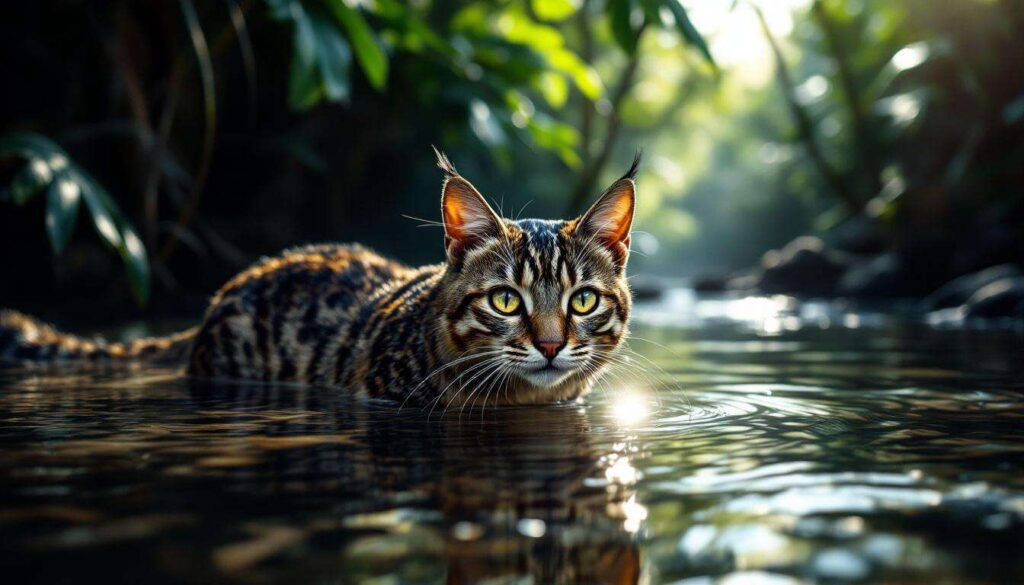
Among the world’s 41 feline species, one stands apart with an extraordinary affinity for water that defies conventional wisdom about cats and their relationship with aquatic environments. The fishing cat represents a remarkable evolutionary adaptation, having developed unique physical and behavioural traits that enable it to thrive in wetland habitats where most other felines would hesitate to venture. This medium-sized predator challenges our understanding of feline capabilities, demonstrating that not all cats share the stereotypical aversion to getting wet.
Introduction to the fishing cat: an exceptional aquatic feline
Scientific classification and discovery
The fishing cat, scientifically known as Prionailurus viverrinus, belongs to the family Felidae and represents one of nature’s most specialised hunters. This species was first described by naturalists who recognised its distinctive adaptations for an aquatic lifestyle, setting it apart from its terrestrial cousins. The fishing cat occupies a unique ecological niche within the feline family, having evolved specifically to exploit aquatic food resources that remain largely inaccessible to other cats.
Size and physical appearance
This robust feline exhibits several distinctive physical characteristics that immediately distinguish it from other wild cats:
- Adult males typically weigh between 11 and 15 kilograms, whilst females range from 6 to 9 kilograms
- Body length measures approximately 75 to 86 centimetres, with tails adding another 25 to 33 centimetres
- The coat displays a greyish-brown base colour adorned with dark spots and stripes
- Short, powerful legs provide stability in muddy terrain and shallow water
- A broad, flattened head accommodates powerful jaw muscles for gripping slippery prey
The fishing cat’s stocky build and muscular frame reflect its adaptation to an environment where strength and stability matter more than the agility prized by tree-dwelling felines. These physical attributes perfectly complement its hunting strategies in aquatic settings.
Evolutionary adaptations
Natural selection has shaped the fishing cat into a highly specialised predator over countless generations. Unlike most felines that evolved to hunt on land, this species developed traits specifically suited to capturing prey in water. The evolutionary pressures of wetland environments favoured individuals with enhanced swimming abilities and water-resistant features, gradually producing a cat uniquely equipped for aquatic hunting. This remarkable adaptation demonstrates nature’s capacity to mould species to fit specific ecological roles.
Understanding these fundamental characteristics provides essential context for appreciating the fishing cat’s remarkable aquatic abilities and ecological significance.
The unique characteristics of the fishing cat
Partially webbed paws
Perhaps the most distinctive feature of the fishing cat lies in its partially webbed feet, a trait virtually unknown among other feline species. Thin membranes of skin extend between the toes, though not to the full extent seen in fully aquatic mammals. This webbing significantly enhances swimming efficiency by increasing the surface area of each paw stroke, allowing the cat to propel itself through water with greater speed and manoeuvrability. When walking on land, the webbing remains unobtrusive, enabling normal terrestrial locomotion without hindrance.
Water-resistant coat
The fishing cat’s fur represents another crucial adaptation to its aquatic lifestyle. The coat consists of two distinct layers that work together to provide exceptional water resistance:
- A dense, short underlayer traps air close to the skin, providing insulation and buoyancy
- Longer guard hairs on the outer layer repel water, preventing saturation
- Natural oils secreted by the skin enhance water-shedding properties
- The coat dries relatively quickly after swimming sessions
This specialised fur allows the fishing cat to maintain body temperature even when repeatedly entering cold water, a vital capability for a predator that may spend hours hunting in aquatic environments.
Powerful build and muscular structure
The fishing cat’s compact, muscular physique serves multiple functions in its aquatic hunting lifestyle. Strong shoulder and foreleg muscles generate the power needed for swimming against currents and diving beneath the surface. The robust build also provides the strength necessary to wrestle with slippery fish and other aquatic prey. This powerful musculature distinguishes the fishing cat from more gracile feline species adapted for speed or climbing.
Sensory adaptations
| Sensory feature | Adaptation | Function |
|---|---|---|
| Whiskers | Highly sensitive vibrissae | Detect water movements and prey location |
| Eyes | Reflective layer behind retina | Enhanced vision in low-light conditions |
| Ears | Small, rounded shape | Reduced water entry during swimming |
These combined physical characteristics create a feline supremely adapted to life at the water’s edge, demonstrating how evolution crafts specialists for specific ecological niches.
The fascinating aquatic behaviour of the fishing cat
Swimming and diving capabilities
The fishing cat exhibits remarkable swimming proficiency that rivals many semi-aquatic mammals. This feline enters water voluntarily and frequently, swimming with confidence across rivers, through marshes, and along coastal areas. Unlike domestic cats that may panic when wet, the fishing cat moves through water with purposeful efficiency, using a dog-paddle motion enhanced by its partially webbed paws. Most impressively, this species can dive completely underwater to pursue prey, holding its breath for extended periods whilst navigating murky depths.
Hunting techniques in water
The fishing cat employs several sophisticated hunting strategies that showcase its aquatic expertise:
- Wading through shallow water whilst scanning for fish movement below the surface
- Sitting motionless at the water’s edge, then striking with lightning-fast paw swipes
- Diving beneath the surface to chase fish in deeper water
- Tapping the water surface with paws to create ripples that attract curious fish
- Ambushing prey from partially submerged positions among aquatic vegetation
These varied techniques demonstrate considerable intelligence and adaptability, with individual cats often developing preferred methods based on local conditions and prey availability.
Dietary preferences
Fish constitute the primary component of the fishing cat’s diet, though this opportunistic predator maintains a diverse menu. The species targets various fish species depending on regional availability, typically focusing on specimens weighing between 50 and 500 grammes. Beyond fish, the fishing cat also hunts crustaceans, molluscs, frogs, water birds, small mammals, and occasionally reptiles. This dietary flexibility proves advantageous when fish populations fluctuate seasonally or due to environmental changes.
Nocturnal and crepuscular activity patterns
The fishing cat primarily hunts during twilight hours and throughout the night, when many aquatic prey species become more active and vulnerable. This nocturnal lifestyle reduces competition with diurnal predators and minimises human encounters in increasingly populated regions. During daylight hours, fishing cats typically rest in dense vegetation near water sources, conserving energy for the next hunting session. This activity pattern reflects both predator-prey dynamics and the need to avoid human disturbance in shared landscapes.
These remarkable behavioural adaptations reveal how the fishing cat has mastered an ecological niche largely unexploited by other felines, though this specialisation also creates vulnerabilities when aquatic habitats face degradation.
The habitat and geographical distribution of the fishing cat
Preferred wetland environments
The fishing cat demonstrates a strong preference for wetland ecosystems that provide abundant aquatic prey and suitable cover. These habitats include freshwater marshes, mangrove forests, reed beds, swamps, and the vegetated margins of rivers, streams, and lakes. The species thrives in areas where water remains present year-round, though it can adapt to seasonally flooded regions if alternative water sources remain accessible during dry periods. Dense vegetation near water bodies provides essential cover for stalking prey and raising young.
Geographic range across Asia
The fishing cat’s distribution spans several South and Southeast Asian countries, though its range has contracted significantly:
- Indian subcontinent: scattered populations in India, Bangladesh, Nepal, and Sri Lanka
- Mainland Southeast Asia: Thailand, Cambodia, and Vietnam
- Insular Southeast Asia: Sumatra and Java in Indonesia
- Historical range: formerly present in Pakistan and possibly Myanmar
This distribution reflects the availability of suitable wetland habitats across tropical and subtropical Asia, though many populations now exist as isolated fragments separated by unsuitable terrain or human development.
Elevation and climate preferences
| Environmental factor | Preferred range | Tolerance limits |
|---|---|---|
| Elevation | Sea level to 300 metres | Occasionally to 1,500 metres |
| Temperature | 20-30°C average | Tolerates 10-40°C |
| Rainfall | 1,500-4,000 mm annually | Requires permanent water sources |
The fishing cat generally inhabits lowland areas where wetlands naturally develop, though some populations persist at moderate elevations in suitable habitat. The species requires climates that support year-round water availability and abundant aquatic prey populations.
Territory size and home ranges
Individual fishing cats maintain territories that vary considerably based on habitat quality and prey abundance. Males typically occupy larger ranges of 16 to 22 square kilometres, whilst females utilise smaller areas of 4 to 6 square kilometres. These territories often overlap between sexes, though same-sex individuals generally maintain exclusive ranges. Territory size increases in degraded habitats where prey density declines, forcing cats to cover greater distances to meet nutritional needs.
The fishing cat’s dependence on specific wetland habitats makes it particularly vulnerable to environmental changes that alter or eliminate these critical ecosystems.
Threats and conservation of the fishing cat
Habitat loss and degradation
The most significant threat facing fishing cat populations stems from widespread wetland destruction across its range. Wetlands have historically been undervalued and targeted for conversion to agriculture, aquaculture, and urban development. Drainage projects eliminate marshes to create farmland, whilst coastal mangroves fall to shrimp farming operations and port facilities. This habitat loss fragments remaining populations, isolating groups that become vulnerable to genetic problems and local extinction.
Human-wildlife conflict
As human populations expand into wetland areas, conflicts between fishing cats and local communities have intensified. Fishing cats occasionally prey on domestic poultry, particularly in areas where natural prey has declined, prompting retaliatory killings by farmers. The species also faces persecution near aquaculture facilities, where operators view them as threats to fish stocks. These conflicts reflect the broader challenge of sharing landscapes between wildlife conservation and human livelihoods.
Pollution and water quality decline
Deteriorating water quality throughout the fishing cat’s range poses serious threats to both the species and its prey base:
- Industrial effluents contaminate rivers and coastal waters
- Agricultural runoff introduces pesticides and fertilisers into wetlands
- Plastic pollution accumulates in aquatic ecosystems
- Heavy metals bioaccumulate through the food chain
These pollutants reduce fish populations, forcing fishing cats to expand their ranges or shift to alternative prey, whilst also causing direct health impacts through contaminated food sources.
Conservation status and protection efforts
The International Union for Conservation of Nature classifies the fishing cat as Vulnerable, recognising the serious threats facing the species. Population estimates remain uncertain, but experts believe numbers have declined by more than 30% over recent decades. Conservation initiatives focus on several key strategies:
| Conservation approach | Implementation methods | Expected outcomes |
|---|---|---|
| Habitat protection | Wetland reserves, legal protections | Secure breeding populations |
| Community engagement | Education, compensation schemes | Reduced human-wildlife conflict |
| Research programmes | Population monitoring, ecological studies | Informed management decisions |
International cooperation between conservation organisations, governments, and local communities proves essential for implementing effective protection measures across the fishing cat’s fragmented range.
Encounter with the fishing cat: observation and protection
Observing fishing cats in the wild
Encountering fishing cats in their natural habitat requires patience, local knowledge, and considerable luck. The species’ nocturnal habits and secretive nature make sightings rare, even in areas where populations persist. Wildlife enthusiasts seeking observations should focus on protected wetland areas with confirmed fishing cat presence, ideally accompanied by experienced local guides familiar with the species’ behaviour and preferred locations. Dawn and dusk offer the best opportunities, when fishing cats transition between resting and hunting activities.
Responsible wildlife tourism
When opportunities for fishing cat observation arise, visitors must prioritise the welfare of these vulnerable animals. Responsible practices include maintaining respectful distances, avoiding flash photography that may disturb nocturnal animals, and never attempting to attract or feed wild fishing cats. Tourism can support conservation when properly managed, generating income for local communities and creating economic incentives for habitat protection, but poorly regulated activities risk disturbing breeding sites and disrupting natural behaviours.
Supporting conservation initiatives
Individuals concerned about fishing cat conservation can contribute through various channels:
- Supporting organisations dedicated to wetland conservation and fishing cat research
- Advocating for stronger environmental protections in fishing cat range countries
- Reducing personal consumption of products linked to wetland destruction
- Participating in citizen science programmes that monitor fishing cat populations
- Educating others about the importance of wetland ecosystems and their specialist inhabitants
The role of captive populations
Zoos and wildlife centres maintaining fishing cat populations serve important conservation functions beyond public education. Captive breeding programmes provide genetic reservoirs that could support future reintroduction efforts if wild populations decline further. These facilities also conduct research into fishing cat biology, reproduction, and behaviour that proves difficult to study in wild settings. However, captive populations cannot substitute for wild habitat protection, which remains the primary conservation priority.
The fishing cat’s survival ultimately depends on humanity’s willingness to value and protect the wetland ecosystems upon which this remarkable feline depends. This species exemplifies the extraordinary adaptations that evolution produces, having transformed from typical terrestrial ancestors into a water-loving predator unlike any other cat. The fishing cat’s partially webbed paws, water-resistant coat, and sophisticated aquatic hunting techniques demonstrate nature’s creativity in filling ecological niches. Yet these same specialisations create vulnerability, as wetland destruction eliminates the specific habitats this feline requires. Conservation efforts addressing habitat protection, human-wildlife conflict mitigation, and pollution reduction offer hope for securing the fishing cat’s future. By recognising the value of wetland ecosystems and the unique species they support, we can ensure that future generations will still share the planet with this exceptional aquatic feline.