



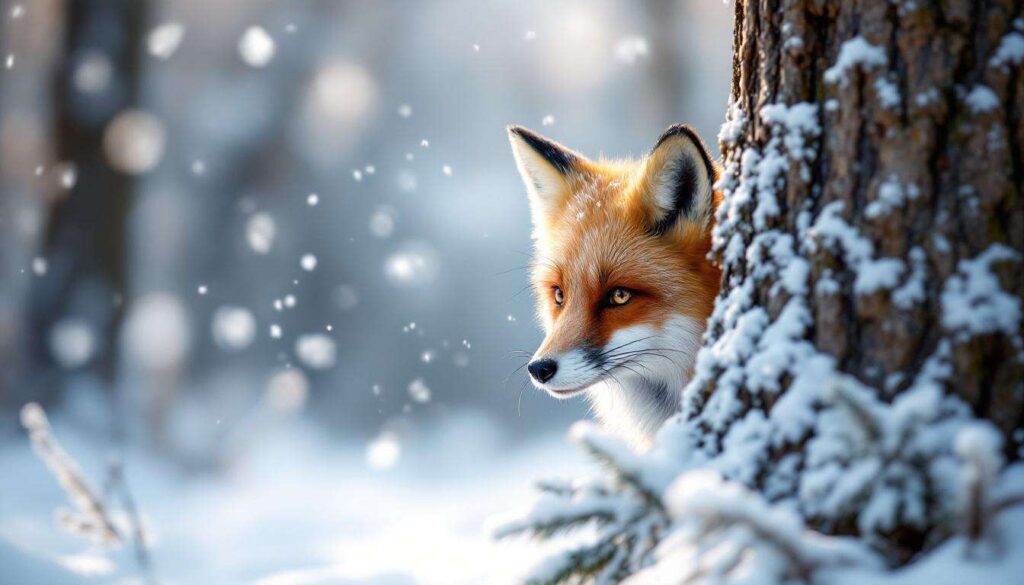
When winter descends with its icy grip, the natural world faces one of its greatest challenges. Across frozen tundras, snow-covered forests, and ice-laden waters, countless species confront temperatures that would prove fatal to most living organisms. Yet these creatures not only endure but thrive, employing an arsenal of remarkable biological innovations and behavioural strategies. From microscopic cellular modifications to complex social behaviours, animals have evolved extraordinary mechanisms to combat the harshest seasonal conditions on Earth.
Physical adaptations: animals’ winter coat
Insulating layers and specialised fur
The most visible defence against winter’s chill manifests in the transformation of animals’ external coverings. Arctic foxes develop dense winter pelts containing multiple layers: a soft undercoat providing primary insulation and longer guard hairs that repel moisture and wind. This dual-layer system traps warm air close to the skin, creating a thermal barrier that maintains body temperature even when external conditions plummet to minus forty degrees Celsius.
Mammals employ various strategies to enhance their insulating capabilities:
- Seasonal moulting to replace summer coats with denser winter fur
- Increased hair follicle density, sometimes doubling the number of hairs per square centimetre
- Hollow hair shafts that trap air for additional insulation
- Colour changes to white or pale shades for camouflage in snowy environments
Anatomical modifications for heat retention
Beyond fur, animals exhibit structural adaptations that minimise heat loss. American hares possess enlarged feet functioning as natural snowshoes, distributing weight across soft snow whilst simultaneously reducing the surface area-to-volume ratio of extremities. Smaller ears, shorter tails, and compact body shapes follow Allen’s Rule, whereby animals in colder climates develop proportionally smaller appendages to conserve warmth.
| Species | Adaptation | Thermal Benefit |
|---|---|---|
| Arctic fox | Fur density increase | 70% improved insulation |
| Polar bear | Blubber layer thickness | Up to 10cm fat insulation |
| Seal | Subcutaneous fat | Survival in sub-zero waters |
These physical transformations represent millions of years of evolutionary refinement, yet they work in concert with behavioural strategies that further enhance survival prospects.
Cooperation and group survival: united against the cold
Collective warmth through huddling
Social species have discovered that unity provides thermal advantages unattainable through individual effort alone. Emperor penguins famously form massive huddles containing thousands of individuals, rotating positions so that each bird spends time in the warmer interior before taking a turn on the exposed perimeter. This cooperative behaviour reduces individual energy expenditure by up to fifty percent during Antarctic winter storms.
Flying squirrels demonstrate similar communal strategies, gathering in tree cavities where their combined body heat elevates the ambient temperature significantly above external conditions. Research indicates that groups of twenty or more individuals can maintain cavity temperatures fifteen to twenty degrees warmer than outside air.
Shared resources and protection
Cooperation extends beyond mere warmth generation. Group living provides multiple survival advantages during resource-scarce winter months:
- Shared vigilance against predators when animals are most vulnerable
- Collective knowledge of food cache locations
- Protection of young through communal care
- Reduced individual energy costs through coordinated foraging
Whilst these social strategies prove effective, some species adopt entirely different approaches, choosing escape rather than endurance.
Migration strategies in response to winter
Long-distance journeys to favourable climates
Migration represents one of nature’s most spectacular solutions to seasonal extremes. Birds lead the exodus from winter territories, with some species travelling thousands of kilometres to reach temperate or tropical refuges. Arctic terns hold the record for the longest migration, covering approximately 70,000 kilometres annually between polar regions.
The timing and routes of these journeys reflect precise evolutionary calibration:
- Departure triggered by decreasing daylight hours and temperature drops
- Navigation using magnetic fields, star patterns, and geographical landmarks
- Stopover sites selected for optimal feeding opportunities
- Return journeys timed to coincide with spring resource availability
Energy costs and survival rates
Whilst migration avoids winter’s harshest conditions, it demands enormous energetic investment and carries significant risks. Birds must accumulate substantial fat reserves before departure, sometimes increasing body mass by forty to fifty percent. The journey itself exposes migrants to predation, exhaustion, and adverse weather conditions.
| Migration Distance | Energy Requirement | Survival Rate |
|---|---|---|
| Under 1,000km | Moderate fat stores | 85-90% |
| 1,000-5,000km | Substantial reserves | 70-80% |
| Over 5,000km | Maximum capacity | 60-75% |
For species unable or unwilling to undertake such arduous journeys, remaining in place requires dramatically different physiological adjustments.
Hibernation and dormancy: the winter pause
True hibernation and metabolic suppression
Hibernation represents perhaps the most dramatic adaptation to winter scarcity. True hibernators undergo profound physiological transformations, reducing metabolic rates to as little as two percent of normal levels. Body temperatures plummet to near-ambient conditions, heart rates decrease from hundreds to fewer than ten beats per minute, and breathing becomes sporadic with minutes between breaths.
Bears, despite popular belief, are not true hibernators but rather enter a state of torpor. Their body temperature drops only moderately, allowing them to rouse quickly if disturbed. Genuine hibernators like ground squirrels and marmots experience far more extreme changes, surviving winter on fat reserves accumulated during warmer months.
Preparation and emergence
Successful hibernation requires meticulous preparation during autumn months:
- Hyperphagia, or excessive eating, to build fat reserves comprising thirty to forty percent of body weight
- Selection and preparation of secure den sites with stable temperatures
- Gradual metabolic adjustments beginning weeks before full dormancy
- Periodic arousals during winter to eliminate waste and prevent muscle atrophy
These periodic awakenings consume significant energy, accounting for up to eighty percent of total winter energy expenditure despite occupying only a small fraction of hibernation duration. Beyond metabolic shutdown, animals employ active mechanisms to maintain function in freezing conditions.
Thermal regulation methods in animals
Countercurrent heat exchange systems
Many cold-adapted species possess sophisticated circulatory arrangements that minimise heat loss from extremities. Countercurrent heat exchangers position arteries carrying warm blood alongside veins returning cold blood from limbs. Heat transfers from outgoing to incoming blood, pre-warming venous blood before it reaches the core whilst cooling arterial blood before it enters extremities.
This system allows arctic foxes to maintain foot temperatures just above freezing whilst keeping core body temperature at normal levels, dramatically reducing overall heat loss. Seabirds employ similar mechanisms in their legs, enabling them to stand on ice for extended periods without freezing or excessive energy expenditure.
Behavioural thermoregulation
Active behavioural choices complement physiological adaptations in maintaining optimal body temperatures:
- Postural adjustments to minimise exposed surface area
- Selection of microhabitats with favourable thermal properties
- Timing of activity to coincide with warmer periods
- Shivering thermogenesis to generate metabolic heat when necessary
Some environments present challenges so extreme that survival requires truly extraordinary biochemical innovations.
Resistance under ice: surprising techniques
Biological antifreeze compounds
Certain species have evolved chemical solutions to prevent ice crystal formation within their tissues. These antifreeze proteins and cryoprotectants, including glucose and glycerol, lower the freezing point of bodily fluids and inhibit ice nucleation. Some insects and spiders can survive body temperatures of minus forty degrees Celsius through these mechanisms.
Wood frogs employ a particularly remarkable strategy: they allow up to sixty-five percent of their body water to freeze whilst protecting vital organs with high concentrations of glucose. Cellular dehydration prevents ice formation inside cells, where it would prove lethal, whilst extracellular ice remains relatively harmless.
Subnival environments and winter activity
The space beneath snow cover creates a surprisingly hospitable microenvironment where temperatures remain relatively stable near zero degrees Celsius, significantly warmer than exposed surfaces. This subnival zone supports active communities of insects, spiders, and small mammals throughout winter.
Arachnologists have documented numerous spider species remaining active in these protected spaces, hunting tiny prey and maintaining metabolic function whilst the world above endures extreme cold. The insulating properties of snow create thermal refuges that enable survival strategies unavailable in exposed locations.
The remarkable diversity of strategies animals employ to survive winter demonstrates nature’s extraordinary capacity for innovation. From the microscopic antifreeze proteins circulating in insect haemolymph to the coordinated huddles of thousands of penguins, life has found countless solutions to one of Earth’s most formidable challenges. These adaptations, refined across countless generations, reveal both the vulnerability and resilience of species facing seasonal extremes. As climate patterns continue shifting, understanding these mechanisms becomes increasingly vital for predicting how wildlife populations will respond to environmental change and what conservation measures may prove necessary to ensure their continued survival.