


As winter temperatures plummet, many dog owners face a common dilemma: when does taking their canine companion outside for a walk become too risky ? Cold weather poses genuine threats to our four-legged friends, and understanding the temperature thresholds can mean the difference between a pleasant outing and a dangerous situation. Dogs vary considerably in their tolerance to cold based on numerous factors, making it essential for responsible owners to recognise the warning signs and adjust their routines accordingly.
At what temperature does walking your dog become dangerous in winter ?
Determining the precise temperature at which outdoor walks become hazardous depends on several variables specific to each individual dog. However, veterinary experts have established general guidelines that provide useful benchmarks for pet owners.
Temperature thresholds and safety zones
Above 7°C represents a comfortable range for most dogs, allowing them to enjoy outdoor activities without significant risk. Between 0°C and 7°C, conditions become more challenging for vulnerable dogs, including small breeds, short-haired varieties, puppies, and senior animals. These dogs may begin experiencing discomfort and require shorter walks with additional protection.
When temperatures drop below 0°C, walks should be brief and carefully monitored, particularly for at-risk dogs. The critical threshold of -7°C is generally considered too cold for most dogs, with only those possessing thick coats or acclimatisation managing comfortably. At -10°C and below, conditions become dangerous for virtually all dogs except breeds specifically adapted to extreme cold, such as Huskies or Malamutes.
Individual factors affecting cold tolerance
Several characteristics determine how well a dog withstands cold temperatures:
- Size: smaller dogs lose body heat rapidly due to their higher surface area to volume ratio
- Coat type: thick, double-coated breeds tolerate cold far better than short-haired varieties
- Age: puppies and elderly dogs possess less efficient thermoregulation
- Health status: dogs with medical conditions or joint problems suffer more in cold weather
- Body condition: underweight dogs lack insulating body fat
Understanding these temperature guidelines helps owners make informed decisions about their dog’s winter exercise routine, though recognising the specific risks associated with cold weather remains equally important.
Risks for your dog in cold weather
Cold weather presents multiple hazards that can seriously compromise a dog’s health and wellbeing. Awareness of these risks enables owners to take preventative measures.
Hypothermia and frostbite
Hypothermia occurs when a dog’s body temperature drops below normal levels, typically below 37°C. This condition manifests through shivering, lethargy, shallow breathing, and in severe cases, loss of consciousness. Frostbite affects extremities such as ears, paws, and tail tips, where blood circulation is reduced in cold conditions. Affected tissue may appear pale or grey, becoming red and swollen as it warms.
Paw pad injuries
Winter surfaces pose particular dangers to sensitive paw pads. Ice, snow, and road salt can cause chemical burns, cuts, and cracking. Additionally, ice balls form between toe pads, causing pain and difficulty walking. De-icing chemicals commonly used on pavements and roads contain substances that irritate and damage paw tissue.
Respiratory problems
Inhaling extremely cold air can irritate a dog’s respiratory tract, potentially triggering coughing, bronchitis, or exacerbating existing conditions like asthma. Dogs with short muzzles, such as Bulldogs or Pugs, face heightened risks due to their already compromised breathing capacity.
Joint stiffness and arthritis aggravation
Cold weather significantly worsens joint pain, particularly in dogs suffering from arthritis or hip dysplasia. Stiffness increases in low temperatures, making movement painful and potentially causing long-term damage if dogs are forced to exercise beyond their comfort level.
Recognising these risks naturally leads to the question of how owners can identify when temperatures have become too dangerous for their particular dog.
How to tell if the temperature is too cold for your dog ?
Observing your dog’s behaviour and physical responses provides the most reliable indication of whether conditions are too cold for safe outdoor activity.
Behavioural warning signs
Dogs communicate discomfort through various behaviours that owners should recognise immediately:
- Reluctance to go outside: hesitation at the door or refusing to walk
- Shivering or trembling: the most obvious sign of cold stress
- Lifting paws repeatedly: indicating painful or cold feet
- Whining or barking: vocal expressions of distress
- Seeking shelter: attempting to return home or find protected spots
- Hunched posture: tucking tail and lowering body to conserve heat
Physical indicators
Beyond behaviour, physical signs reveal when a dog is struggling with cold temperatures. Pale or blue-tinged gums suggest insufficient circulation, whilst slow, shallow breathing may indicate hypothermia. Ears and paws that feel unusually cold to the touch require immediate attention.
The five-minute rule
A practical guideline suggests that if the temperature feels uncomfortably cold for you after five minutes outside in appropriate clothing, it is likely too cold for your dog. This rule particularly applies to small, short-haired, young, or elderly dogs.
| Dog Type | Safe Temperature | Caution Zone | Dangerous Temperature |
|---|---|---|---|
| Large, thick-coated breeds | Above -7°C | -7°C to -12°C | Below -12°C |
| Medium breeds | Above 0°C | 0°C to -7°C | Below -7°C |
| Small or short-haired breeds | Above 7°C | 0°C to 7°C | Below 0°C |
| Puppies and seniors | Above 7°C | 4°C to 7°C | Below 4°C |
Once you have identified that conditions may be challenging for your dog, implementing protective measures becomes essential for safe winter walks.
Tips for protecting your dog during winter walks
Proper preparation and protective equipment significantly reduce the risks associated with cold weather walks.
Appropriate clothing and accessories
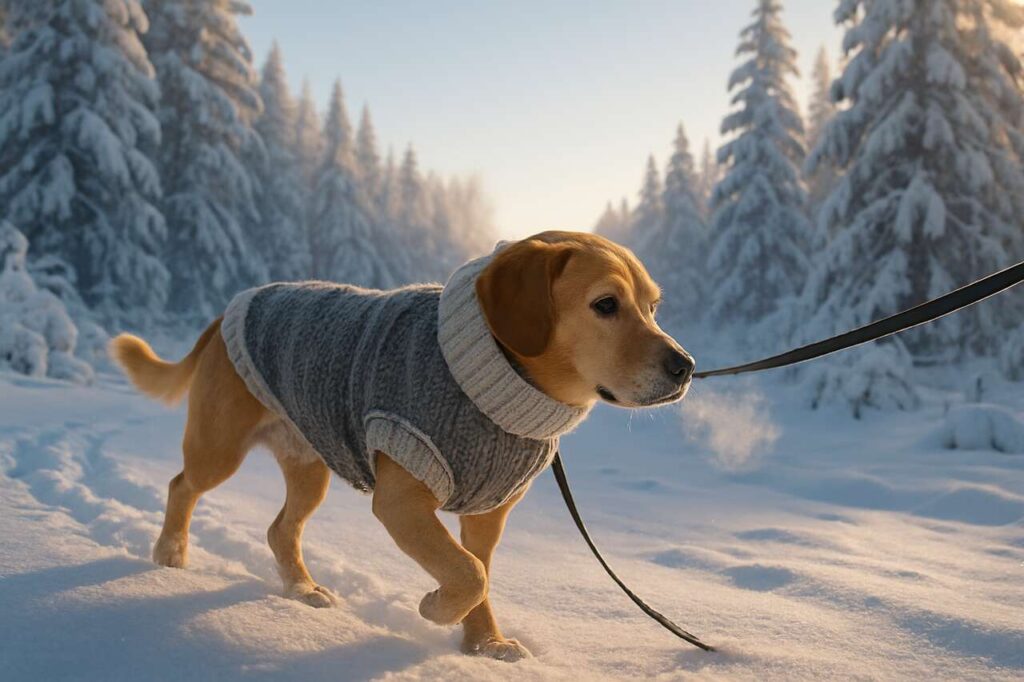
Dog coats and jackets provide essential insulation for vulnerable dogs. Choose waterproof, wind-resistant materials that cover the chest and belly whilst allowing freedom of movement. Ensure proper fit: garments should not restrict walking or toilet activities. Paw protection through boots prevents contact with harmful substances and insulates against frozen surfaces. Alternatively, apply protective paw balm before walks to create a barrier against salt and ice.
Pre-walk preparations
Several steps enhance safety before venturing outdoors:
- Check weather forecasts and wind chill factors
- Apply paw balm to all four feet
- Ensure your dog has eaten recently for energy and warmth
- Attach reflective gear or lights for visibility in dark winter conditions
- Plan shorter routes with options to cut the walk short
During the walk
Maintain a brisk pace to keep your dog moving and generating body heat. Avoid stopping for extended periods, as stationary dogs cool rapidly. Stay on cleared paths when possible to minimise paw exposure to snow and ice. Keep walks shorter than usual, reducing duration by 30-50% in very cold conditions.
Post-walk care
Immediately upon returning home, thoroughly dry your dog’s coat, paying particular attention to the belly and legs. Inspect and clean paws, removing any ice balls, salt residue, or debris. Check for signs of frostbite or injury. Provide fresh water and allow your dog to warm up gradually in a comfortable indoor environment.
Beyond protective measures, adjusting the fundamental approach to daily exercise routines helps dogs thrive throughout winter months.
How to adapt your dog’s daily walk in winter ?
Modifying walking schedules and routines ensures dogs receive adequate exercise whilst minimising cold exposure.
Timing adjustments
Schedule walks during the warmest parts of the day, typically mid-morning or early afternoon when temperatures peak. Avoid early morning and evening walks when temperatures drop significantly. On particularly cold days, consider multiple brief outings rather than one extended walk.
Duration and intensity modifications
Reduce walk length based on temperature and your dog’s tolerance. A dog that normally walks for 60 minutes may require only 20-30 minutes in freezing conditions. Increase walking pace to generate more body heat, but avoid overexertion which can cause sweating and subsequent chilling.
Alternative exercise options
Supplement outdoor time with indoor activities:
- Interactive games like hide-and-seek or treasure hunts
- Indoor fetch in hallways or large rooms
- Puzzle toys and food-dispensing devices for mental stimulation
- Treadmill training for dogs accustomed to this equipment
- Indoor agility courses using household items
Route selection
Choose sheltered paths that provide protection from wind, such as tree-lined streets or routes alongside buildings. Avoid open fields or exposed areas where wind chill intensifies. Select routes with minimal salt treatment if your dog is not wearing boots.
Whilst adapting regular walks proves essential, many owners wonder whether their dogs can safely enjoy the unique opportunities that snow presents.
Can my dog play in the snow ?
Snow play offers enrichment and excitement for many dogs, but requires careful supervision and specific precautions.
Benefits of snow play
Dogs often find snow mentally stimulating and physically engaging. The novel texture and scent provide sensory enrichment, whilst activities like bounding through drifts offer excellent exercise. Many dogs instinctively enjoy snow, exhibiting playful behaviour and increased energy.
Safety considerations
Despite the appeal, snow play carries specific risks. Limit session duration to prevent excessive cold exposure, typically 15-30 minutes depending on temperature and dog characteristics. Monitor for signs of discomfort throughout play. Ensure snow is clean and free from antifreeze, salt, or other contaminants that dogs might ingest whilst eating snow or licking their paws.
Snow-specific hazards
Ice beneath snow surfaces can cause injuries from slips and falls. Deep snow may hide obstacles like branches or debris. Snow consumption, whilst tempting for dogs, can lead to stomach upset or, in excessive amounts, dangerous drops in body temperature. Discourage eating large quantities of snow.
Best practices for snow play
Supervise all snow activities closely. Use appropriate protective gear including coats and boots. Choose safe locations away from roads, frozen ponds, or areas with potential hazards. Bring your dog inside immediately if they show any signs of cold stress. After play, follow thorough post-walk care procedures, paying extra attention to removing snow and ice from between paw pads.
Winter presents unique challenges for dog owners, but understanding temperature thresholds, recognising warning signs, and implementing protective measures enables safe outdoor activities. Most dogs can walk comfortably above 7°C, whilst temperatures below 0°C require shortened outings and extra precautions. Small breeds, puppies, elderly dogs, and those with health conditions need particular attention. Protective clothing, paw care, adjusted schedules, and vigilant monitoring help prevent hypothermia, frostbite, and paw injuries. Snow play can enrich your dog’s winter experience when supervised appropriately and limited in duration. By adapting routines to seasonal conditions and prioritising your dog’s individual needs, you ensure their safety and wellbeing throughout the coldest months.