

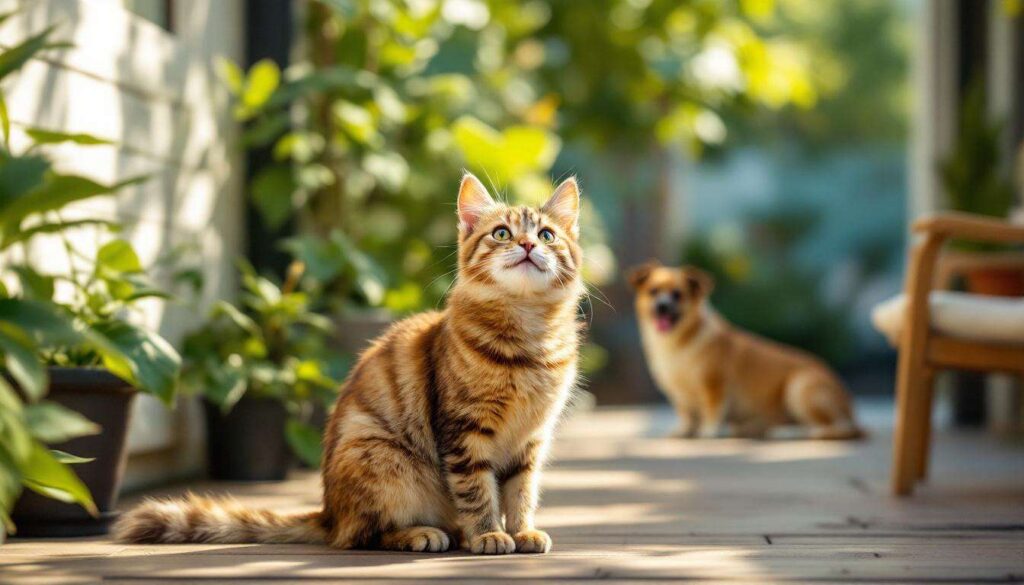
The relationship between humans and their animal companions has undergone remarkable transformations throughout history. Whilst dogs have long been celebrated as humanity’s most devoted allies, cats have traditionally maintained a reputation for independence and aloofness. Yet recent scientific investigations reveal an intriguing narrative: through the forces of domestication, cats have evolved characteristics that bring them closer to their canine counterparts than previously imagined. This convergence, driven by shared environmental pressures and human influence, challenges our understanding of how domestication shapes animal behaviour and physiology.
The origins of cat domestication
The wild ancestors of domestic cats
Domestic cats trace their lineage to Felis silvestris lybica, the African wildcat, a solitary hunter native to the Near East and North Africa. Unlike dogs, whose domestication involved deliberate human selection, cats essentially domesticated themselves through a symbiotic relationship with early agricultural communities. As humans established permanent settlements and stored grain, rodent populations flourished, creating an ecological niche that wildcats exploited.
Archaeological evidence suggests this relationship began approximately 10,000 years ago in the Fertile Crescent, coinciding with the advent of agriculture. The mutual benefits were clear:
- Cats gained reliable access to prey concentrated around human settlements
- Humans benefited from natural pest control protecting their food stores
- Neither party required significant behavioural modification initially
- The relationship developed gradually without intensive selective breeding
Genetic evidence of domestication
Modern genetic studies reveal that domestic cats exhibit remarkably few genetic differences from their wild ancestors compared to dogs. This genetic similarity reflects the relatively recent and less intensive nature of feline domestication. Whilst dogs underwent approximately 30,000 years of selective breeding for specific traits, cats maintained much of their ancestral genome, preserving their independent nature and hunting instincts.
Research into the feline genome has identified specific genetic modifications affecting fear responses, memory formation, and learning capabilities. These alterations enabled cats to tolerate human proximity and eventually seek social interaction, fundamental shifts that facilitated their transition from wild predators to household companions.
Understanding these genetic foundations provides crucial context for examining how cats subsequently evolved behaviours more commonly associated with dogs.
When and why cats became our companions
The agricultural revolution and feline integration
The transformation of cats from wild hunters to domestic companions occurred gradually over millennia. Unlike the deliberate domestication of dogs for hunting, herding, and protection, cats integrated into human society through self-domestication. The agricultural revolution created conditions where wildcats could thrive near human settlements without requiring significant behavioural adaptation.
| Species | Domestication timeline | Primary role | Selection intensity |
|---|---|---|---|
| Dogs | Approximately 30,000 years | Hunting, herding, protection | High – intensive breeding |
| Cats | Approximately 10,000 years | Pest control | Low – natural selection |
Cultural significance across civilisations
As agricultural societies expanded, cats accompanied human migration routes, spreading from the Near East throughout Europe, Asia, and eventually worldwide. Ancient Egyptian civilisation elevated cats to sacred status, associating them with deities and implementing laws protecting them. This cultural reverence accelerated their integration into human households beyond purely utilitarian roles.
Maritime exploration further dispersed cats globally, as sailors valued them for controlling rodent populations aboard ships. This practical function gradually evolved into companionship, particularly as urbanisation reduced the necessity for working animals and increased demand for pets providing emotional connection.
These historical developments set the stage for examining the behavioural transformations that would bring cats closer to dog-like characteristics.
Behavioural evolution: from independent felines to faithful companions
Neurological adaptations enabling social bonding
Recent neurological research demonstrates that domestication has fundamentally altered feline brain structure and function. Studies examining the feline genome reveal modifications to neural pathways governing social behaviour, fear responses, and attachment formation. These genetic changes have enabled cats to develop bonds with humans that superficially resemble canine attachment patterns.
Key behavioural adaptations include:
- Increased vocalisation directed specifically at humans, including distinctive meowing patterns
- Development of greeting behaviours such as tail-up approaches and head-bunting
- Enhanced ability to read human emotional cues and facial expressions
- Formation of secure attachment bonds with primary caregivers
- Willingness to engage in play and training activities
Comparing feline and canine social behaviours
Whilst cats have developed more social behaviours, fundamental differences persist between feline and canine psychology. Dogs evolved as pack animals with hierarchical social structures, making them naturally predisposed to integrate into human family units. Cats, descended from solitary hunters, retain more selective social tendencies despite domestication.
However, contemporary research reveals convergence in specific areas. Both species now demonstrate separation anxiety, seek human attention for reassurance, and modify their behaviour based on human feedback. Some cats even exhibit dog-like behaviours including following owners between rooms, responding to name calls, and displaying excitement upon their return home.
These behavioural parallels reflect deeper evolutionary processes shaped by domestication pressures common to both species.
Difference in domestication between cats and dogs: a distinct evolution
Morphological convergence despite separate evolutionary paths
Scientific examination of 1,810 skulls from cats, dogs, and their wild ancestors reveals remarkable cranial similarities despite 50 million years of separate evolution. This morphological convergence demonstrates how similar environmental pressures can produce analogous physical adaptations in unrelated species. Domestication has selected for traits including reduced skull size, shortened snouts, and altered facial proportions in both cats and dogs.
This phenomenon, known as convergent evolution, occurs when distinct species develop similar characteristics in response to comparable selective pressures. In domestic animals, these pressures include:
- Human preference for juvenile facial features triggering nurturing responses
- Selection against aggression favouring smaller, less threatening skull structures
- Adaptation to processed food reducing jaw strength requirements
- Neurological changes affecting brain size and cranial capacity
Divergent domestication strategies
Despite morphological similarities, the mechanisms of domestication differ substantially between cats and dogs. Dogs underwent intensive artificial selection, with humans deliberately breeding for specific traits including obedience, working abilities, and physical characteristics. This resulted in extraordinary breed diversity and deep integration into human social structures.
Cats experienced comparatively minimal selective breeding until recent centuries. Their domestication proceeded through natural selection favouring individuals tolerant of human proximity whilst maintaining hunting proficiency. This preserved greater genetic similarity to wild ancestors and explains why cats retain more autonomous behavioural patterns than dogs.
These contrasting domestication pathways have produced species that, whilst increasingly similar in some respects, maintain distinct relationships with humans.
Contemporary cat breeds: adaptation to our lifestyle
Modern breeding and behavioural selection
Recent centuries have witnessed accelerated changes in feline breeding practices. Whereas historical cats were valued primarily for pest control, contemporary breeding emphasises companionship qualities, temperament, and aesthetic appeal. This shift has produced breeds exhibiting notably dog-like characteristics including increased sociability, trainability, and human-orientation.
Breeds developed for enhanced companionship include:
- Ragdolls, known for relaxed temperament and tolerance of handling
- Maine Coons, exhibiting social behaviour and willingness to follow owners
- Siamese cats, characterised by vocalisation and demand for human interaction
- Bengals, combining wild appearance with domesticated social tendencies
Environmental pressures shaping modern cats
Urbanisation and indoor living have created new selective pressures favouring cats adapted to confined spaces and constant human proximity. Modern domestic cats must tolerate closer contact, reduced territory, and limited hunting opportunities compared to their ancestors. These environmental demands have accelerated selection for temperament traits previously uncommon in felines.
| Environmental factor | Traditional cat response | Modern adaptation |
|---|---|---|
| Limited territory | Stress and aggression | Tolerance of confinement |
| Constant human presence | Avoidance behaviour | Seeking social interaction |
| Reduced hunting opportunities | Frustration | Play behaviour substitution |
These adaptations demonstrate how contemporary living conditions continue shaping feline evolution towards characteristics facilitating harmonious coexistence with humans.
The impact of humans on the evolution of domestic felines
Artificial selection and genetic modification
Human influence on feline evolution extends beyond natural domestication processes. Modern breeding practices employ artificial selection to enhance desired traits whilst minimising unwanted characteristics. This has produced cats with temperaments, physical features, and behavioural patterns dramatically different from wild ancestors.
Genetic research has identified specific modifications linked to domestication, particularly affecting neural pathways governing fear and social behaviour. These changes have enabled cats to overcome instinctive wariness of humans, facilitating the development of attachment bonds and cooperative behaviours previously absent in the species.
Future implications for feline evolution
Continued human influence will likely accelerate convergence between cats and dogs in specific behavioural domains. As companion animals rather than working animals, cats face selective pressures favouring social compatibility, trainability, and emotional responsiveness. These pressures may eventually produce felines whose behaviour more closely resembles that of dogs whilst retaining distinctive feline characteristics.
However, concerns exist regarding the welfare implications of intensive breeding. Maintaining genetic diversity whilst selecting for companionship traits presents challenges requiring careful management to ensure the health and wellbeing of future feline generations.
The evolutionary journey of domestic cats reveals profound insights into how human activity shapes animal biology. Whilst cats have developed characteristics bringing them closer to dogs, they retain distinctive qualities reflecting their unique domestication history. The forces of evolution continue operating, driven by changing human lifestyles and preferences, suggesting that the relationship between cats and humans will continue evolving. Understanding these processes enhances our appreciation of the complex bonds between humans and their animal companions whilst highlighting responsibilities accompanying our influence over other species’ evolutionary trajectories.