

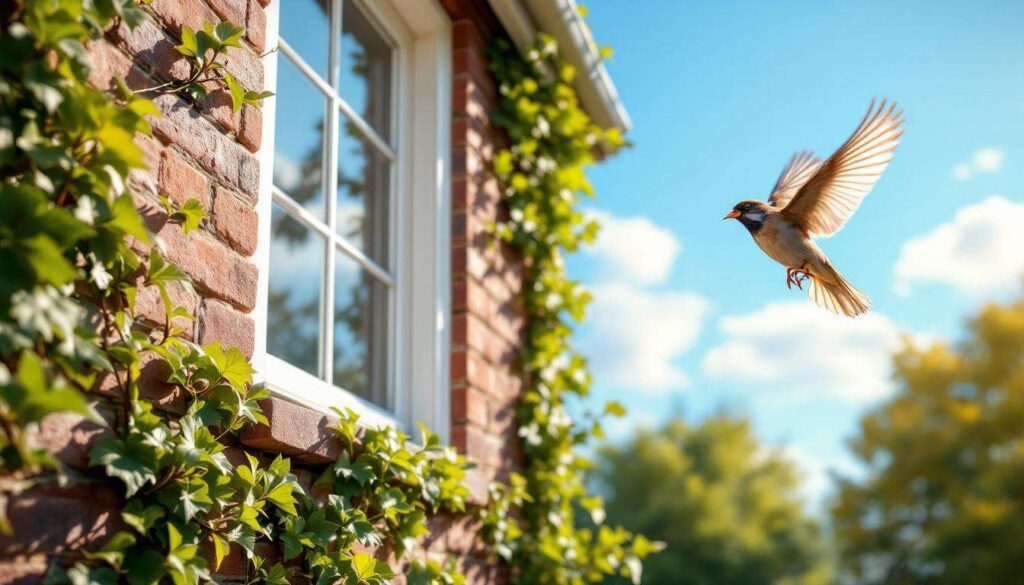
The sudden thud of a bird striking your window can be startling, but this isn’t a random occurrence. Millions of birds collide with glass surfaces annually, often with fatal consequences. Understanding why these collisions happen and what steps you can take to prevent them is crucial for protecting our feathered neighbours. From reflective surfaces that confuse avian navigation to territorial behaviour during breeding season, the reasons behind these incidents are more complex than many homeowners realise. Fortunately, practical solutions exist that can dramatically reduce these tragic encounters whilst maintaining the aesthetic appeal of your property.
Why do birds hit windows ?
Reflection and transparency create deadly illusions
Birds collide with windows primarily because they cannot perceive glass as a solid barrier. Windows reflect the surrounding environment, including trees, sky, and vegetation, creating a convincing illusion of open space. When birds see these reflections, they interpret them as safe flight paths and attempt to navigate through what appears to be continuous habitat. This phenomenon becomes particularly dangerous during daylight hours when reflections are most pronounced. Transparent glass presents an equally hazardous scenario, as birds can see through windows to vegetation or sky on the other side, perceiving a clear route that doesn’t actually exist.
Territorial behaviour during breeding season
Some bird species, particularly during breeding season, exhibit aggressive territorial behaviour that leads to deliberate window strikes. Male birds may perceive their own reflection as a rival intruder and repeatedly attack the glass surface. Common culprits include:
- Robins defending their nesting territories
- Cardinals displaying heightened aggression during spring months
- Blackbirds protecting their breeding grounds
- Wrens engaging in territorial disputes
This behaviour differs from accidental collisions because these birds intentionally strike the window multiple times, often returning day after day. Understanding these patterns helps explain why certain windows experience repeated incidents whilst others remain relatively collision-free.
The consequences for birds and homeowners
Physical impact on bird populations
Window collisions result in devastating consequences for bird populations worldwide. Studies estimate that hundreds of millions of birds die annually from these impacts, making it one of the leading human-related causes of avian mortality. The severity of injuries varies considerably:
| Injury Type | Percentage | Outcome |
|---|---|---|
| Immediate death | 50-70% | Fatal on impact |
| Severe trauma | 20-30% | Death within hours |
| Minor injuries | 10-20% | Potential recovery |
Even birds that initially fly away after impact often suffer from internal injuries or concussions that prove fatal later. Migratory species face particular vulnerability during peak migration periods when unfamiliar territories and exhaustion compound the risks.
Property concerns and emotional distress
Homeowners face their own challenges when birds repeatedly strike windows. Beyond the emotional distress of witnessing injured wildlife, practical concerns include window damage from repeated impacts, unsightly marks and droppings on glass surfaces, and the unpleasant task of disposing of deceased birds. Some homeowners report sleep disruption from early morning territorial attacks, whilst others express frustration at feeling helpless to prevent these incidents. Addressing these collisions therefore benefits both wildlife conservation and residential quality of life.
How to prevent bird collisions with windows
Breaking up reflections with external treatments
The most effective prevention strategies focus on making glass visible to birds whilst maintaining human visibility and aesthetic appeal. External treatments work best because they address reflections at their source. Window films, decals, and tape create visual markers that birds can detect. However, random placement proves ineffective; patterns must follow the “2×4 rule” with markers spaced no more than two inches apart horizontally and four inches vertically. This spacing prevents birds from attempting to fly through perceived gaps.
Architectural and landscaping modifications
Strategic changes to your property’s design can significantly reduce collision risks. Consider these environmental adjustments:
- Installing external screens or netting at least three inches from glass surfaces
- Angling windows downward to reflect ground rather than sky
- Relocating bird feeders either within one metre of windows or beyond ten metres
- Pruning vegetation that creates attractive reflections in problematic windows
- Drawing curtains or blinds partially closed during peak migration seasons
These modifications work by either eliminating reflective surfaces or creating physical barriers that prevent high-speed impacts. The optimal approach often combines multiple strategies tailored to your specific property characteristics and the local bird species present.
Simple and effective solutions to implement
Cost-effective DIY options
Homeowners needn’t invest heavily to protect birds effectively. Budget-friendly solutions include applying soap or tempera paint in patterns on exterior glass, hanging lightweight curtains or external cord systems, and attaching UV-reflective tape that remains largely invisible to humans but highly visible to birds. Decals shaped like hawk silhouettes prove largely ineffective unless applied according to proper spacing guidelines, but custom patterns using painter’s tape can achieve excellent results at minimal cost.
Commercial products designed for bird safety
The market now offers numerous purpose-built products specifically engineered to prevent bird collisions. These include fritted glass with permanent patterns baked into the surface, external roller blinds with bird-friendly spacing, and specialised films incorporating patterns visible primarily in the ultraviolet spectrum that birds perceive. Whilst these solutions typically require greater initial investment, they provide long-term effectiveness without compromising architectural aesthetics. Many modern commercial buildings now incorporate these technologies during construction, demonstrating their viability for residential applications.
The importance of awareness and ecological impact
Contributing to conservation efforts
Individual actions collectively create significant positive impacts on bird populations. As urbanisation continues expanding into natural habitats, the responsibility for coexistence increasingly falls upon property owners. Implementing bird-friendly measures demonstrates environmental stewardship whilst supporting broader conservation initiatives. Many declining bird species face multiple threats simultaneously, and eliminating window collisions removes one significant mortality factor. Participating in citizen science programmes that document collision incidents helps researchers understand patterns and develop improved prevention strategies.
Educational opportunities for communities
Raising awareness about window collisions creates ripple effects throughout neighbourhoods. When one household implements visible solutions, neighbours often inquire and subsequently adopt similar measures. Schools, community centres, and local businesses represent particularly impactful locations for bird-friendly modifications due to their extensive glass surfaces and educational potential. Sharing experiences and successful strategies through social media, community groups, and local wildlife organisations amplifies individual efforts into collective action that benefits entire ecosystems.
When to call a professional to help an injured bird
Assessing the situation safely
If you discover a bird that has struck your window, careful assessment determines the appropriate response. Birds that remain conscious but appear stunned may simply need time to recover. Place a cardboard box over the bird to protect it from predators whilst it recuperates, checking after thirty minutes to see if it has recovered sufficiently to fly away. Never attempt to provide food or water to an injured bird, as this can cause additional harm.
Recognising when expert intervention is necessary
Contact a licensed wildlife rehabilitator immediately if the bird exhibits any of these concerning signs:
- Visible bleeding or obvious wing or leg fractures
- Inability to stand or perch after one hour
- Eyes closed or unresponsive to gentle stimulation
- Laboured breathing or gasping
- Twisted neck or inability to hold head upright
Wildlife rehabilitators possess the expertise and legal authorisation to provide medical care for injured wild birds. Keep contact information for local rehabilitation centres readily available, as rapid intervention significantly improves survival chances. Many regions maintain wildlife emergency hotlines that can provide immediate guidance whilst arranging professional assistance.
Protecting birds from window collisions requires understanding the underlying causes and implementing proven prevention strategies. The combination of reflective surfaces and transparent glass creates hazards that birds simply cannot navigate safely without human intervention. By applying external treatments, modifying landscaping, and raising community awareness, homeowners can dramatically reduce these preventable deaths. Whether through simple DIY solutions or purpose-built commercial products, every effort contributes to preserving bird populations facing numerous environmental challenges. When injuries do occur, knowing how to respond appropriately and when to seek professional help ensures the best possible outcomes for affected birds whilst supporting broader conservation goals.