



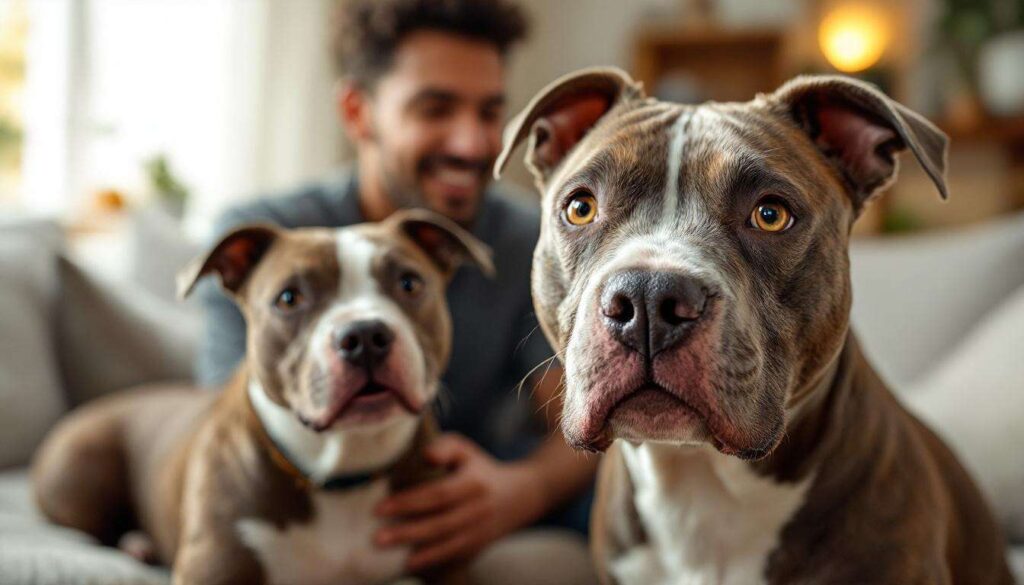
The relationship between humans and their canine companions has long been celebrated for its depth and complexity. Amongst the many breeds that form these remarkable bonds, pit bulls stand out for their particularly expressive nature and emotional intelligence. Despite facing considerable stigma, these dogs demonstrate an extraordinary capacity to communicate their feelings through facial expressions, body language, and vocal cues. Recent examples shared across social platforms have captivated audiences worldwide, showcasing pit bulls engaging in what appears to be genuine emotional dialogue with their owners. These heartwarming interactions reveal not only the individual personalities of these animals but also challenge widespread misconceptions about the breed itself.
The endearing personality of the pit bull
Pit bulls possess a distinctive charm that sets them apart from many other breeds. Their reputation for loyalty and affection towards family members is well-documented, with countless owners attesting to their gentle and playful nature. These dogs exhibit a remarkable enthusiasm for life, approaching each day with boundless energy and an eagerness to engage with their human companions.
Physical expressions of affection
The breed’s physical characteristics contribute significantly to their expressive capabilities. Their broad faces and prominent facial muscles allow for a wide range of expressions that owners quickly learn to interpret. The characteristic pit bull smile, featuring an open mouth with slightly curled lips, has become an iconic image that contradicts the aggressive stereotype often associated with the breed. This expression typically accompanies:
- A vigorously wagging tail that moves the entire rear portion of the body
- Relaxed body posture with loose, fluid movements
- Bright, alert eyes that maintain gentle contact with their owner
- Playful bowing and bouncing behaviours
Temperament and social behaviour
Beyond their physical expressions, pit bulls demonstrate exceptional social intelligence. They thrive on human interaction and often seek out opportunities for close contact, whether through cuddling on the sofa or following their owners from room to room. This desire for companionship reflects their historical development as family dogs, bred to be both protective and affectionate. Their playful demeanour extends well into adulthood, with many pit bulls maintaining puppy-like enthusiasm throughout their lives.
These personality traits naturally lead to questions about how pit bulls process and display their emotional experiences.
Understanding the pit bull’s emotions
The emotional landscape of pit bulls is remarkably sophisticated, rivalling that of many other intelligent breeds. Research into canine cognition has revealed that dogs experience a complex array of emotions, including joy, anxiety, fear, and even what appears to be empathy. Pit bulls, with their heightened sensitivity to human emotional states, demonstrate these feelings with particular clarity.
Reading emotional cues
Experts in animal behaviour emphasise the importance of understanding the full spectrum of pit bull emotional expression. Whilst the famous smile indicates happiness and contentment, owners must also recognise signs of stress or discomfort. Key indicators include:
- Lip licking or yawning when not tired, suggesting nervousness
- Whale eye, where the white of the eye becomes visible, indicating anxiety
- Tucked tail or lowered body posture signalling fear
- Excessive panting unrelated to physical exertion or heat
The science behind canine emotions
Scientific studies have demonstrated that dogs possess the neurological structures necessary for experiencing basic emotions. The limbic system, responsible for emotional processing, functions similarly in dogs and humans. This biological similarity explains why pit bulls can form such profound emotional connections with their owners. They respond to human emotional states through a process called emotional contagion, where they mirror the feelings of those around them. A calm, happy owner typically has a calm, happy pit bull, whilst anxious energy can transfer to the dog, creating a feedback loop of shared emotional states.
| Emotional State | Physical Indicators | Typical Context |
|---|---|---|
| Happiness | Relaxed smile, wagging tail, playful movements | During play, receiving attention, meal times |
| Anxiety | Lip licking, pacing, whale eye | Unfamiliar environments, loud noises, separation |
| Contentment | Soft eyes, relaxed posture, gentle breathing | Resting with family, after exercise, during grooming |
This emotional awareness forms the foundation for the remarkable ways pit bulls interact with their human families.
The unique communication with its owner
The bond between a pit bull and its owner develops through countless daily interactions, creating a sophisticated communication system that transcends simple commands and obedience. These dogs become adept at reading subtle cues from their humans, whilst simultaneously developing their own methods of conveying needs, desires, and emotions.
Vocal communication patterns
Pit bulls employ a diverse range of vocalisations to communicate with their owners. Unlike some breeds that bark excessively, many pit bulls develop nuanced vocal repertoires that include grumbles, whines, and distinctive sounds that their owners learn to interpret. These vocalisations often accompany specific requests or emotional states, creating a dialogue that feels remarkably conversational. Some pit bulls even appear to modulate their sounds in response to human speech patterns, leading to those endearing moments where the dog seems to be attempting actual conversation.
Non-verbal dialogue
The non-verbal communication between pit bulls and their owners often becomes so refined that outsiders might miss the subtle exchanges taking place. A slight head tilt, a particular stance, or a focused gaze can convey volumes of information. Owners report that their pit bulls:
- Bring specific toys to request particular types of play
- Position themselves strategically to indicate they need to go outside
- Use gentle pawing or nudging to request attention or affection
- Employ different intensity levels of eye contact depending on the urgency of their communication
This intricate communication system has found a new audience through modern technology and social platforms.
The role of social media in the popularity of videos
Digital platforms have revolutionised how people share and consume content about their pets, with pit bull videos emerging as particularly popular amongst animal lovers. These platforms provide unprecedented opportunities for owners to showcase the true nature of their dogs, countering negative stereotypes through authentic, unfiltered moments of connection and joy.
Viral moments and community building
Videos capturing pit bulls expressing emotions or communicating with their owners frequently achieve viral status, accumulating millions of views within days. This phenomenon occurs because these clips tap into universal themes of companionship and understanding whilst simultaneously challenging preconceived notions about the breed. The comment sections of such videos often transform into supportive communities where pit bull owners share their own experiences, creating networks of advocacy and education.
Platform-specific trends
Different social media platforms host various types of pit bull content, each serving distinct purposes in reshaping public perception:
| Platform | Content Type | Audience Reach |
|---|---|---|
| TikTok | Short emotional moments, humorous interactions | Younger demographics, high viral potential |
| Photo series, daily life documentation | Broad age range, sustained engagement | |
| YouTube | Longer narratives, training videos | Detail-oriented viewers, educational focus |
The widespread sharing of these positive portrayals has measurable effects on how society views the breed.
The impact of videos on the perception of pit bulls
The proliferation of heartwarming pit bull content across social media has contributed to a gradual shift in public perception. Where once the breed faced near-universal suspicion and fear, increasingly nuanced conversations acknowledge the role of training, socialisation, and individual temperament in determining a dog’s behaviour.
Challenging stereotypes through visibility
Each video showing a pit bull displaying affection, gentleness, or humour serves as counter-evidence to the aggressive stereotype. This visual testimony proves particularly powerful because it allows viewers to witness authentic behaviour rather than relying on secondhand accounts or sensationalised media reports. The cumulative effect of thousands of such videos creates a new narrative about pit bulls as loving family companions rather than dangerous animals.
Measurable changes in adoption and legislation
Animal welfare organisations have noted correlations between positive social media representation and increased adoption rates for pit bulls. Furthermore, advocacy groups cite online content as valuable tools in campaigns against breed-specific legislation. The human faces and stories behind these videos personalise the issue, making it harder for legislators and community members to maintain blanket policies targeting the breed. These changes demonstrate that representation matters, even for animals, in shaping societal attitudes and policies.
For individual owners, these broader social changes complement the personal journey of building a strong relationship with their pit bull.
Tips for strengthening the bond with your dog
Developing a deep, communicative relationship with a pit bull requires intentional effort, patience, and understanding. The connections showcased in popular videos don’t emerge spontaneously but result from consistent, positive interactions over time.
Daily practices for connection
Building a strong bond involves incorporating specific practices into daily routines. Effective strategies include:
- Dedicated one-on-one time without distractions from phones or other activities
- Learning to read and respond appropriately to your dog’s body language
- Engaging in activities your dog particularly enjoys, whether fetch, tug-of-war, or simply walking
- Maintaining consistency in commands, expectations, and daily schedules
- Using positive reinforcement to encourage desired behaviours
Training as communication
Training sessions serve dual purposes: they teach practical skills whilst simultaneously establishing communication frameworks. When approached with patience and positivity, training becomes a dialogue where both dog and owner learn to understand each other’s signals. Advanced training, including tricks or specialised tasks, can further deepen this connection by providing mental stimulation and opportunities for collaboration. The process of working together towards shared goals strengthens trust and mutual respect, foundations upon which exceptional bonds are built.
The remarkable connections between pit bulls and their owners, increasingly visible through social media, demonstrate the profound capacity for interspecies communication and affection. These relationships challenge outdated stereotypes whilst celebrating the unique personalities and emotional depth of individual dogs. By understanding pit bull emotions, learning their communication methods, and investing time in building strong bonds, owners unlock rewarding partnerships characterised by mutual understanding and unconditional love. The viral videos capturing these moments serve not merely as entertainment but as powerful testimonies to the true nature of a breed too long misunderstood.