

Few birds capture the imagination quite like the robin, a small yet striking creature that has become synonymous with British gardens and countryside. With its vibrant plumage, enchanting song, and surprisingly bold personality, this familiar visitor has earned a special place in the hearts of nature enthusiasts and casual observers alike. From its territorial displays to its remarkable willingness to interact with humans, the robin exhibits behaviours that set it apart from many other garden birds, making it a subject of endless fascination for ornithologists and gardeners throughout the United Kingdom.
The symbol of spring
Cultural significance across the seasons
The robin has long been associated with seasonal renewal and hope, particularly during the spring months when its presence becomes more noticeable in gardens and woodlands. This connection stems from the bird’s increased vocal activity during breeding season, which typically begins in late winter and extends through spring. The robin’s cheerful appearance during these months has cemented its status as a herald of warmer days, though it remains present throughout the year in most regions of the United Kingdom.
Historical and literary connections
Throughout British folklore and literature, the robin has occupied a prominent position as a symbol of good fortune and protection. Victorian-era Christmas cards frequently featured robins, establishing a cultural link between the bird and winter festivities that persists today. This association arose partly because postmen of that era wore red uniforms and were nicknamed “robins”, creating a connection between the bird and the delivery of seasonal greetings. The robin’s enduring presence in art, poetry, and seasonal traditions reflects its deep-rooted significance in British cultural identity.
Beyond its symbolic associations, the robin’s actual behaviour during spring demonstrates why it has earned such reverence, particularly as breeding pairs establish territories and begin the complex process of nest-building.
A melodious song
Vocal characteristics and patterns
The robin possesses one of the most distinctive and melodious songs among British garden birds, characterised by a series of clear, warbling phrases that flow seamlessly into one another. Unlike many species that sing primarily during spring, robins maintain their vocal presence throughout much of the year, with both males and females capable of producing complex songs. Their repertoire includes:
- High-pitched, liquid warbles during territorial defence
- Softer, contemplative phrases during autumn and winter
- Sharp “tic” alarm calls when threatened
- Gentle contact calls between mated pairs
Seasonal variations in singing behaviour
The robin’s singing patterns vary considerably throughout the year, with peak vocal activity occurring during the breeding season from March through July. However, what truly distinguishes the robin is its willingness to sing during winter months and even at night, particularly in urban areas where artificial lighting may trigger nocturnal singing. This behaviour has led to numerous mistaken reports of nightingales in areas where only robins reside, demonstrating the quality and beauty of the robin’s vocal abilities.
| Season | Singing frequency | Primary purpose |
|---|---|---|
| Spring | Very high | Territory establishment and mate attraction |
| Summer | Moderate | Territory maintenance |
| Autumn | Moderate to high | Individual territory defence |
| Winter | Low to moderate | Territory maintenance |
This vocal versatility connects directly to the robin’s most immediately recognisable feature, which makes identification straightforward even for novice birdwatchers.
Distinctive colours
The iconic red breast
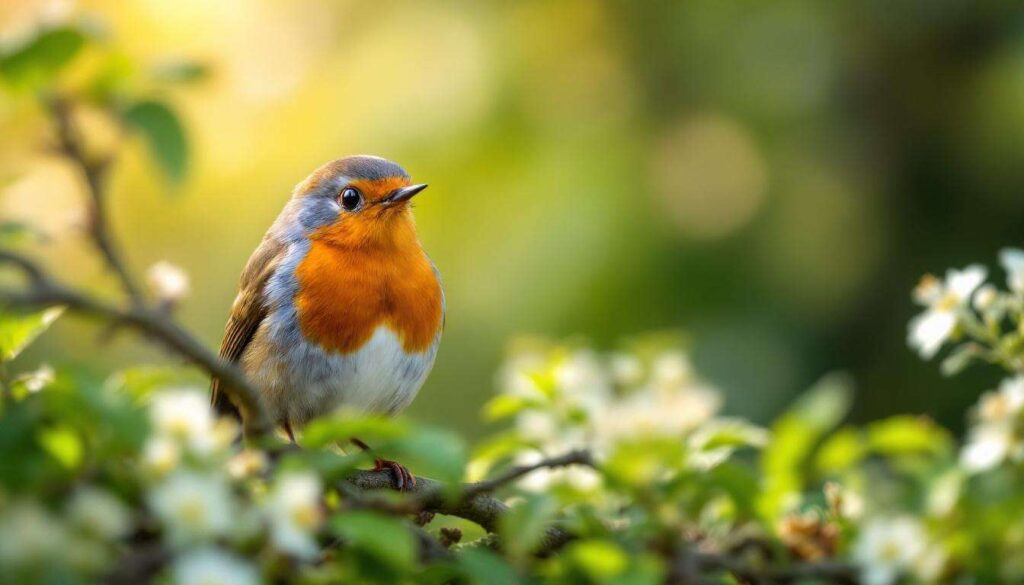
The robin’s most celebrated feature remains its vibrant orange-red breast, which extends from the lower face down to the belly, creating a striking contrast against the bird’s olive-brown upperparts. Despite common references to a “red” breast, the colouration is more accurately described as orange, though this distinction has done little to alter centuries of cultural naming conventions. This distinctive plumage serves multiple functions, from species recognition to territorial signalling, making it both aesthetically pleasing and functionally important.
Plumage development and variations
Juvenile robins present a markedly different appearance from adults, lacking the characteristic breast colouration entirely. Young birds display heavily spotted brown plumage that provides camouflage during their vulnerable early weeks. This juvenile plumage undergoes a gradual transformation during the bird’s first autumn moult, when the distinctive orange-red breast begins to develop. The differences between juvenile and adult plumage include:
- Brown, speckled appearance in juveniles versus plain olive-brown upperparts in adults
- Absence of orange-red colouration in young birds
- Gradual colour development during post-juvenile moult
- Subtle variations in breast colour intensity between individuals
These visual characteristics play a crucial role in the robin’s complex social behaviours, particularly regarding how individuals establish and defend their territories.
A unique territorial behaviour
Year-round territory defence
Unlike many bird species that only defend territories during breeding season, robins maintain individual territories throughout the entire year, with both males and females exhibiting strong territorial instincts. This unusual behaviour means that the robin population in any given area remains relatively stable across seasons, with each bird defending a space that provides sufficient food resources. Territory sizes vary depending on habitat quality, ranging from as small as half an acre in resource-rich gardens to several acres in less productive woodland environments.
Aggressive displays and confrontations
The robin’s territorial nature manifests in surprisingly aggressive behaviours, with disputes sometimes escalating to physical combat. When confronted by intruders, robins employ a range of defensive tactics:
- Puffing out the red breast to maximise its visual impact
- Adopting threatening postures with raised head and spread tail
- Singing loudly from prominent perches to advertise territory ownership
- Engaging in aerial chases and physical altercations when visual displays prove insufficient
These confrontations can prove fatal in extreme cases, demonstrating the intensity of the robin’s territorial commitment. The bird’s willingness to defend its space extends even to attacking its own reflection in windows or mirrors, mistaking the image for a rival intruder.
This fierce independence contrasts intriguingly with the robin’s remarkably tolerant attitude towards humans, creating a paradox that has long fascinated observers.
Interaction with humans
Garden companionship
Robins display an exceptional boldness around humans that distinguishes them from most other British birds, often approaching gardeners at close range and even following them as they dig or disturb soil. This behaviour stems from the bird’s natural tendency to follow large animals such as wild boar, which historically disturbed forest floors and exposed invertebrate prey. In modern gardens, humans performing similar soil disturbance have become surrogate providers of feeding opportunities, leading to remarkably close encounters.
Hand-feeding and habituation
With patience and consistent behaviour, robins can be trained to feed from human hands, a testament to their adaptability and intelligence. This willingness to interact directly with people has made the robin a favourite among gardeners and nature enthusiasts. Successful hand-feeding requires:
- Regular presence in the garden at consistent times
- Offering appropriate foods such as mealworms or small insects
- Remaining still and non-threatening during initial approaches
- Gradual progression from ground feeding to hand feeding
This unique human-bird relationship provides opportunities for close observation and photography whilst offering the robin supplementary food sources, particularly during harsh winter conditions.
The robin’s interactions with humans form just one aspect of its broader role within garden ecosystems, where it performs vital functions that benefit both wildlife and gardeners.
The ecological importance of the robin
Pest control and soil health
Robins serve as highly effective natural pest controllers in garden environments, consuming substantial quantities of insects, spiders, and other invertebrates that might otherwise damage plants or become nuisances. Their diet includes numerous species considered problematic by gardeners, such as aphids, caterpillars, beetles, and various larvae. By maintaining populations of these creatures at manageable levels, robins contribute to healthier gardens without the need for chemical interventions.
Indicator species status
The presence and behaviour of robins can provide valuable insights into overall ecosystem health, as these birds prove sensitive to environmental changes and habitat degradation. Declining robin populations may indicate broader ecological problems, including:
- Reduction in invertebrate prey due to pesticide use
- Loss of suitable nesting sites through habitat modification
- Climate change impacts on breeding success and survival rates
- Disruption of food chains affecting multiple species
Conservation efforts that benefit robins typically support wider biodiversity, making these birds valuable focal species for habitat management and environmental monitoring programmes throughout the United Kingdom.
The robin’s multifaceted appeal encompasses aesthetic beauty, behavioural complexity, cultural significance, and ecological value, creating a compelling package that explains its enduring popularity. From its melodious song that brightens winter days to its bold personality and willingness to share garden spaces with humans, this remarkable bird continues to captivate observers across generations. Its territorial nature demonstrates evolutionary adaptations that ensure survival, whilst its role in controlling pest populations and indicating ecosystem health underscores its practical importance beyond mere aesthetic appreciation. Whether encountered during spring gardening sessions or observed defending winter territories, the robin remains an irreplaceable component of British natural heritage, embodying the intimate connection between humans and the wildlife that shares our immediate environment.