

Cats are notoriously independent creatures, often masking discomfort or illness until symptoms become severe. Among the subtle changes in feline behaviour, one seemingly innocuous detail in your cat’s daily routine could signal a serious hydration issue that demands immediate attention. Understanding the connection between your pet’s habits and their water intake is crucial for maintaining their overall health and preventing potentially life-threatening conditions.
The Importance of Hydration in Cats
Why Water Matters for Feline Health
Water plays an essential role in virtually every bodily function of your cat. From regulating body temperature to facilitating digestion and nutrient absorption, adequate hydration ensures that your feline companion’s organs operate efficiently. Cats typically require between 50 to 70 millilitres of water per kilogram of body weight daily, though this varies based on diet, activity level, and environmental conditions.
The Evolutionary Context
Domestic cats descended from desert-dwelling ancestors who obtained most of their moisture from prey. This evolutionary background means modern cats have a naturally low thirst drive, making them particularly vulnerable to dehydration. Unlike dogs, who actively seek water when thirsty, cats often fail to compensate adequately when their fluid intake drops below optimal levels.
Health Consequences of Poor Hydration
Chronic dehydration in cats can lead to several serious medical conditions:
- Kidney disease and reduced renal function
- Urinary tract infections and crystal formation
- Constipation and digestive complications
- Decreased blood volume and circulation problems
- Compromised immune system function
These hydration-related issues develop gradually, which is why recognising early warning signs becomes paramount for responsible cat ownership. The subtle changes in your cat’s routine can provide valuable clues about their hydration status before serious complications arise.
Signs of Dehydration to Watch For
Physical Indicators
Several physical symptoms can alert you to potential dehydration in your cat. The skin tent test remains one of the most reliable home assessments: gently pinch the skin between your cat’s shoulder blades and release it. In a well-hydrated cat, the skin snaps back immediately. If it returns slowly or remains tented, dehydration is likely present.
Additional physical signs include:
- Dry, tacky gums instead of moist, slippery surfaces
- Sunken eyes with a dull appearance
- Loss of skin elasticity throughout the body
- Thick, ropy saliva rather than clear, watery consistency
Behavioural Changes
The critical detail in your cat’s routine that may reveal dehydration often manifests as behavioural shifts. A dehydrated cat typically displays lethargy, reduced interest in play, and decreased grooming frequency. Their coat may appear unkempt or lack its usual lustre. More tellingly, changes in litter box habits—particularly decreased urination frequency or darker, more concentrated urine—serve as red flags that warrant immediate investigation.
Advanced Symptoms
Severe dehydration presents with more alarming symptoms that require urgent veterinary attention. These include panting, rapid heart rate, weakness, and collapse. At this stage, the condition has progressed beyond home management and demands professional intervention to prevent organ damage or failure.
Understanding these warning signs naturally leads to the question of how cat owners can effectively track their pet’s hydration status on a daily basis.
How to Monitor Your Cat’s Hydration
Tracking Water Consumption
Establishing a baseline measurement of your cat’s water intake provides invaluable data for detecting changes. Measure the amount of water you place in your cat’s bowl each day, then measure what remains after 24 hours. This simple practice reveals normal consumption patterns and highlights concerning deviations.
| Cat Weight | Minimum Daily Water Intake | Optimal Daily Water Intake |
|---|---|---|
| 3 kg | 150 ml | 210 ml |
| 4 kg | 200 ml | 280 ml |
| 5 kg | 250 ml | 350 ml |
| 6 kg | 300 ml | 420 ml |
Observing Litter Box Habits
The frequency and appearance of urination provide direct insight into hydration levels. A healthy, well-hydrated cat typically urinates two to three times daily, producing pale yellow urine. Dark, concentrated urine or reduced frequency suggests inadequate fluid intake. Maintaining a clean litter box facilitates accurate monitoring of these crucial indicators.
Regular Health Assessments
Incorporating weekly hydration checks into your cat care routine helps identify problems early. Perform the skin tent test, examine gum moisture, and assess overall energy levels consistently. Documenting these observations creates a health record that proves invaluable during veterinary consultations.
Once you understand monitoring techniques, identifying the underlying factors contributing to dehydration becomes the next logical step.
Common Causes of Feline Dehydration
Dietary Factors
Diet composition significantly influences hydration status. Cats consuming exclusively dry kibble obtain minimal moisture from their food—typically only 10 per cent water content compared to 70 to 80 per cent in wet food. This substantial difference means dry-fed cats must compensate by drinking considerably more water, which their naturally low thirst drive often fails to prompt adequately.
Environmental Conditions
Temperature and humidity affect water requirements substantially. During warmer months or in heated homes, cats lose more moisture through respiration and may require increased intake. Additionally, the placement and cleanliness of water bowls impact consumption patterns. Cats often avoid stale water or bowls positioned near litter boxes or high-traffic areas.
Medical Conditions
Several health issues predispose cats to dehydration:
- Kidney disease reducing the ability to concentrate urine
- Diabetes mellitus causing excessive urination
- Hyperthyroidism increasing metabolic water loss
- Gastrointestinal disorders leading to vomiting or diarrhoea
- Dental disease making drinking painful
Identifying these causes provides the foundation for implementing effective solutions to improve your cat’s hydration.
Solutions to Encourage Your Cat to Drink
Water Source Optimisation
Providing multiple water stations throughout your home increases accessibility and consumption. Cats prefer fresh, clean water, so changing bowls at least once daily proves essential. Many felines favour running water, making cat fountains an excellent investment that appeals to their instinctive preference for moving water sources.
Dietary Modifications
Transitioning to wet food or incorporating it into your cat’s diet dramatically improves hydration. Even mixing water into existing food increases moisture intake. Some owners successfully add low-sodium broth or tuna water to make plain water more appealing, though this approach requires moderation to avoid creating fussy drinking habits.
Bowl Selection and Placement
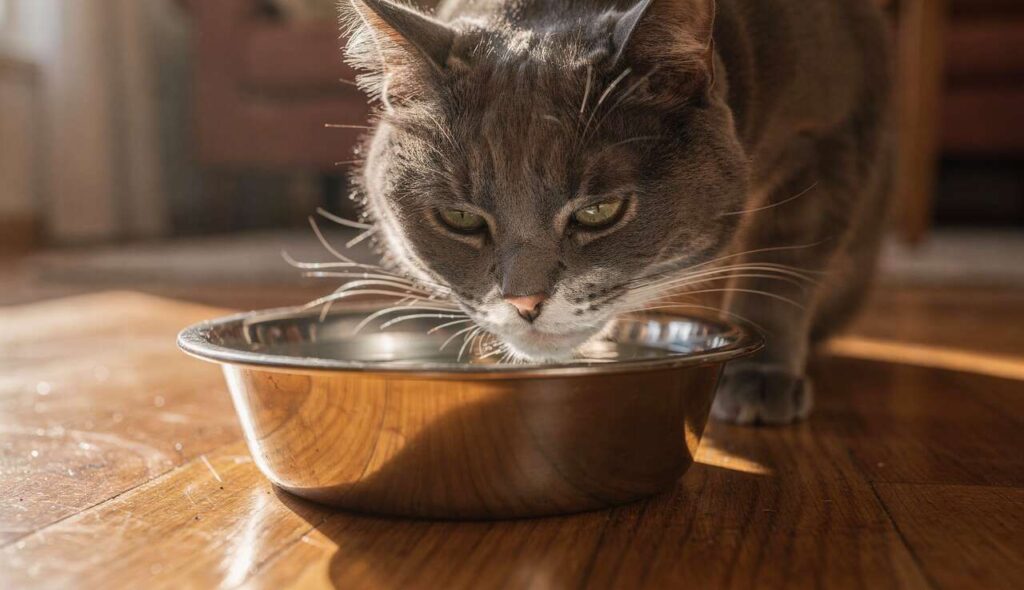
The type and location of water containers matter significantly. Wide, shallow bowls prevent whisker fatigue, whilst ceramic or stainless steel options avoid plastic tastes that deter some cats. Position water bowls away from food dishes, as cats instinctively separate eating and drinking areas. Placing bowls in quiet, accessible locations encourages regular use.
Flavour Enhancement Techniques
For particularly reluctant drinkers, consider these strategies:
- Adding ice cubes to create movement and interest
- Offering different water temperatures to find preferences
- Using filtered water to eliminate chlorine tastes
- Freezing low-sodium broth into ice cubes for gradual flavour release
Despite implementing these solutions, certain situations necessitate professional veterinary evaluation and intervention.
When to Consult a Vet
Urgent Warning Signs
Certain symptoms demand immediate veterinary attention regardless of home intervention attempts. If your cat exhibits persistent vomiting, severe lethargy, refuses food for more than 24 hours, or shows signs of pain when attempting to urinate, contact your veterinarian without delay. These indicators may signal serious underlying conditions requiring diagnostic testing and treatment.
Chronic Hydration Concerns
Even without acute symptoms, schedule a veterinary consultation if your cat consistently drinks less than expected despite environmental modifications. Underlying medical conditions such as kidney disease often present subtly, making professional assessment crucial for early detection and management. Blood tests and urinalysis can reveal problems before they become critical.
Preventive Health Monitoring
Senior cats and those with pre-existing conditions benefit from regular veterinary check-ups that include hydration assessment. Cats over seven years old should receive comprehensive examinations at least annually, with senior cats over eleven requiring biannual evaluations. These appointments allow veterinarians to identify trends and intervene proactively.
Maintaining proper hydration in cats requires vigilance, environmental adjustments, and recognition of warning signs. The seemingly minor details in your cat’s daily routine—changes in water consumption, litter box habits, or energy levels—can reveal significant health concerns before they escalate. By implementing monitoring strategies, optimising water sources, and knowing when professional intervention becomes necessary, you ensure your feline companion receives the hydration essential for long-term health and wellbeing. Early detection and proactive management of hydration issues can prevent serious complications and contribute to a longer, healthier life for your cat.