



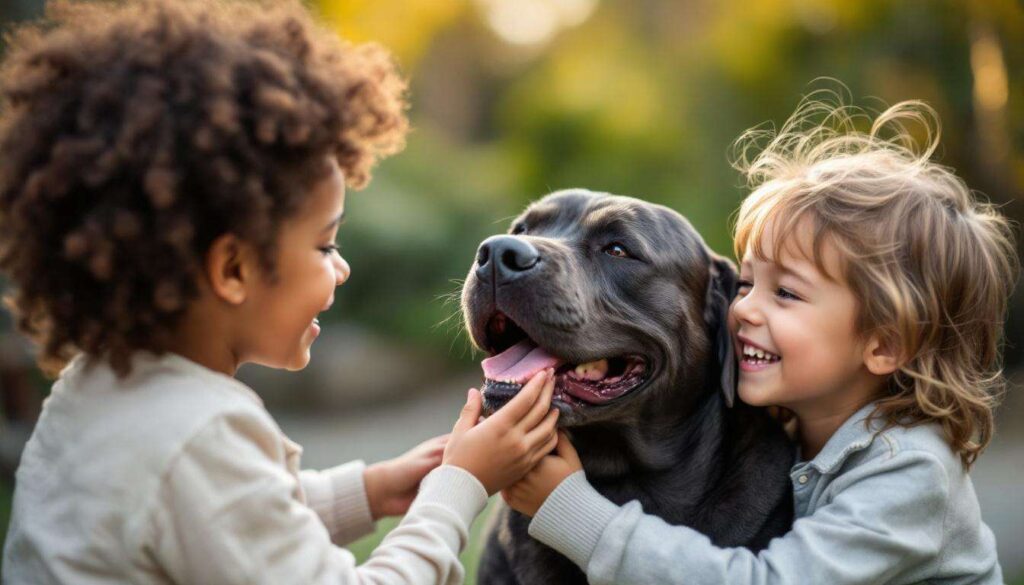
The Cane Corso, an imposing Italian mastiff breed, has captured the attention of families seeking a loyal and protective companion. With their muscular build and confident demeanour, these dogs naturally raise questions amongst parents considering them for households with young children. Understanding whether this powerful breed can integrate successfully into family life requires examining their inherent characteristics, behavioural patterns, and the commitment necessary to ensure everyone’s safety and happiness.
The temperament of the Cane Corso
Natural protective instincts
The Cane Corso possesses deeply ingrained guardian instincts that have been refined over centuries of selective breeding. Originally developed in Italy to protect property and livestock, these dogs maintain a vigilant and territorial nature that makes them exceptional watchdogs. Their protective tendencies manifest as a natural wariness towards strangers and an unwavering devotion to their family unit. This characteristic can prove beneficial for families seeking security, yet it demands responsible management to prevent overprotective behaviours.
Loyalty and bonding capabilities
These magnificent dogs form exceptionally strong bonds with their human family members. The Cane Corso typically selects one primary person as their main attachment figure whilst maintaining affectionate relationships with other household members. Their loyalty runs remarkably deep, and they thrive on being included in family activities rather than being relegated to isolation. This devotion translates into a willingness to please their owners, which can facilitate training when approached correctly.
Intelligence and sensitivity
Cane Corsos demonstrate remarkable intelligence combined with emotional sensitivity that allows them to read human moods and household dynamics. They respond to the emotional atmosphere within their home and can become anxious or stressed in chaotic environments. Their cognitive abilities enable them to learn commands quickly, though their independent thinking sometimes manifests as stubbornness. This intelligence requires mental engagement to prevent boredom-related behavioural issues.
Understanding these fundamental temperament traits provides the foundation for evaluating how the breed interacts with the youngest family members.
Behaviour with children
Size and strength considerations
The physical dimensions of a Cane Corso present practical challenges when young children are present. Adult males typically weigh between 45 and 50 kilograms, whilst females range from 40 to 45 kilograms. Their substantial size means that even playful movements can accidentally knock over toddlers or small children. The breed’s powerful build requires constant supervision during interactions to prevent unintentional injuries caused by their sheer mass and strength.
| Age of child | Supervision level required | Risk factors |
|---|---|---|
| 0-3 years | Constant, direct supervision | Accidental knocking, size disparity |
| 4-7 years | Close monitoring | Rough play, boundary testing |
| 8+ years | Periodic checking | Reduced with proper training |
Patience levels with young children
Whilst individual temperaments vary, Cane Corsos generally display moderate patience with children’s unpredictable behaviours. They tolerate gentle interaction from familiar children reasonably well, particularly when raised alongside them from puppyhood. However, they typically possess less tolerance for the poking, pulling, and sudden movements characteristic of very young children compared to breeds specifically developed as companion animals. Their patience has limits, and they may remove themselves from uncomfortable situations or, in rare cases, issue warning signals that children might not recognise.
Protective instincts towards family children
The breed’s guardian nature often extends to protective behaviours towards children they recognise as family members. This can manifest positively as a gentle watchfulness over sleeping babies or a calm presence near playing children. However, this same instinct may cause the dog to misinterpret normal childhood interactions, such as rough play between siblings or visiting friends, as threats requiring intervention. Owners must remain vigilant to prevent the dog from inappropriately “protecting” children from harmless situations.
These behavioural patterns directly connect to the physical and mental stimulation requirements that influence the dog’s overall demeanour in the home.
Exercise and stimulation needs
Daily physical activity requirements
Cane Corsos require substantial daily exercise to maintain physical health and mental equilibrium. A minimum of two hours of activity should include:
- Structured walks covering at least 8-10 kilometres daily
- Opportunities for free running in secure, enclosed spaces
- Strength-building activities such as weight pulling or advanced obedience work
- Swimming sessions when accessible, which provide low-impact conditioning
Families with young children often find meeting these demanding exercise needs challenging, as accompanying toddlers on lengthy walks proves impractical and time-consuming.
Mental stimulation essentials
Beyond physical exertion, these intelligent dogs require consistent mental challenges to prevent destructive behaviours stemming from boredom. Puzzle feeders, scent work, advanced training sessions, and interactive play all contribute to cognitive satisfaction. An understimulated Cane Corso may develop problematic behaviours including excessive barking, destructive chewing, or hyperactivity that compounds safety concerns around small children.
Consequences of insufficient activity
When exercise and stimulation needs remain unmet, Cane Corsos often exhibit frustration-based behaviours that make them unsuitable companions for young children. Pent-up energy may manifest as jumping, mouthing, or overly boisterous play that endangers small family members. The commitment required to properly exercise this breed must be carefully weighed against the time demands of caring for young children.
The living environment plays an equally critical role in determining whether this breed can thrive within a family setting.
Ideal environment for a Cane Corso
Space requirements
These large dogs require adequate physical space both indoors and outdoors. A house with a securely fenced garden measuring at least 100 square metres provides the minimum outdoor area for proper exercise and toileting. Inside the home, the dog needs sufficient room to move comfortably without constantly navigating around children’s toys, play areas, and furniture. Cramped living conditions increase stress levels and the likelihood of accidental collisions with young children.
Secure boundaries and fencing
The territorial nature of the Cane Corso necessitates robust fencing measuring at least 1.8 metres in height. These athletic dogs can clear lower barriers, and their protective instincts may drive them to patrol property boundaries vigilantly. Families must ensure that children cannot inadvertently leave gates open, as an escaped Cane Corso poses risks to themselves and others given their size and guarding tendencies.
Climate considerations
With their short coat and lean build, Cane Corsos demonstrate moderate cold tolerance but require protection during harsh winter weather. They adapt reasonably well to various climates provided they have appropriate shelter. Families in extremely cold regions must accommodate indoor housing during winter months, which may prove challenging in homes with limited space and young children requiring their own activity areas.
Creating the right environment works in tandem with comprehensive training efforts to shape the dog’s behaviour appropriately.
Training and socialisation
Early socialisation importance
Exposing Cane Corso puppies to diverse experiences during their critical developmental period between 3 and 16 weeks proves essential for producing stable adult dogs. This socialisation should include:
- Controlled interactions with children of various ages
- Exposure to different environments, sounds, and surfaces
- Positive encounters with other animals
- Handling by multiple people to accept grooming and veterinary care
Families with young children often struggle to provide consistent socialisation whilst managing childcare responsibilities, yet this foundation proves non-negotiable for safe cohabitation.
Obedience training requirements
The Cane Corso demands firm, consistent training from knowledgeable handlers who can establish clear leadership without resorting to harsh methods. Basic obedience commands must be mastered reliably, with particular emphasis on recall, impulse control, and boundary respect. Professional training assistance is strongly recommended, representing both a financial and time investment that families must consider alongside their other commitments.
Ongoing behavioural management
Training a Cane Corso never truly concludes; rather, it requires continuous reinforcement throughout the dog’s life. Regular practice sessions, consistent rule enforcement, and immediate correction of unwanted behaviours demand sustained attention that busy parents may find difficult to maintain. The consequences of inconsistent training become particularly serious when children’s safety depends upon the dog’s reliable responses to commands.
Even with excellent training, families must implement specific strategies to ensure harmonious daily life.
Tips for a harmonious cohabitation
Establishing household rules
Creating clear boundaries benefits both the dog and children. Designated dog-free zones, such as children’s bedrooms or play areas, provide safe spaces where youngsters can retreat. Similarly, the dog requires their own quiet area where children understand they must not disturb the animal during rest periods. Consistency in enforcing these rules prevents confusion and reduces potential conflict situations.
Supervised interaction protocols
Never leaving young children unsupervised with a Cane Corso represents the most critical safety measure. Even the most well-trained, gentle dog may react unpredictably to a child’s sudden movement or accidental pain infliction. Parents should actively supervise all interactions, remaining close enough to intervene immediately if necessary. Teaching children appropriate behaviour around dogs, including recognising stress signals and respecting the animal’s space, forms an essential component of this supervision.
Meeting everyone’s needs
Balancing the requirements of both children and dog demands careful planning and often external support. Engaging dog walkers, utilising daycare facilities, or enlisting family assistance can help ensure the Cane Corso receives adequate exercise whilst parents attend to children’s needs. Creating structured routines that accommodate feeding times, exercise periods, and rest intervals helps establish predictability that benefits all family members.
The Cane Corso can potentially integrate into families with young children, though this arrangement demands exceptional commitment, resources, and vigilance. Their protective nature, intelligence, and loyalty offer benefits, yet their size, strength, and exercise requirements present genuine challenges. Families must honestly assess their capacity to provide extensive training, consistent supervision, and adequate stimulation whilst meeting young children’s needs. For households prepared to invest substantial time and effort, with realistic expectations and professional support, cohabitation may succeed. However, many families with very young children may find breeds with more naturally child-tolerant temperaments and manageable size better suited to their circumstances. The decision ultimately rests on individual family dynamics, experience with large breeds, and unwavering commitment to everyone’s safety and wellbeing.